

Step Index Explained for Fiber Optics and More
Explore what step index means in fiber optics 📡, its unique features, performance benefits, and how it applies beyond optics in tech and engineering fields.
Edited By
Oliver Bennett
Trading the US30 index demands more than just understanding what it represents. This index tracks 30 major US companies, making it a barometer of the American economy and a favourite among traders worldwide—including those in South Africa. The best times to trade US30 aren't random; they line up with specific market sessions, bursts of volatility, and key economic announcements.
South African traders, juggling their own working hours and the South Africa Standard Time (SAST, UTC+2) zone, must factor in these timing differences to catch the optimal trading windows. For example, the US stock market opens at 3:30 pm SAST and closes at 10 pm SAST, which means the peak activity hours often fall squarely within local late afternoons and evenings.

High volatility tends to cluster around market openings, closings, and major economic data releases. Trading during these periods can offer bigger price swings, but also greater risk.
To make sense of this, consider these key sessions:
US Market Hours (15:30 to 22:00 SAST): The prime window. Expect frequent sharp moves as traders respond to news and orders.
Pre-market and After-hours: These quieter periods can show lower liquidity and unusual price action.
Overlap with London Session (15:30 to 17:30 SAST): This two-hour overlap often increases volume and volatility since both major markets are active.
Familiarity with these sessions helps South African traders decide when to enter or exit the market more confidently. For instance, placing trades late afternoon allows you to catch the US market open's volatility spike. Conversely, trading in the middle of the US trading day might mean slower price movement.
Understanding time zones and volatility patterns is just the start. Effective trading also means weighing your risk tolerance, strategy, and the impact of events like Federal Reserve announcements and economic data releases from the US that can shake markets.
In sum, knowledge of when the US30 is most active forms the foundation for better timing, risk management, and potentially higher profits.
Understanding the US30 and the environment in which it trades is vital for anyone looking to engage with this popular index effectively. The US30, often referred to as the Dow Jones Industrial Average, represents 30 leading US companies across various sectors. By grasping its construction and the factors influencing it, traders and investors can better time their decisions and manage risks.
The US30 is a price-weighted stock market index reflecting the performance of 30 prominent blue-chip companies listed on US stock exchanges, such as Apple, Boeing, and Coca-Cola. Unlike market-cap-weighted indices, each component’s price influences the index based on its share price, not its overall market value. This means movements in higher-priced stocks like Goldman Sachs can disproportionately affect the index.
This structure makes the US30 an indicator of the overall health of major US industries, ranging from technology to manufacturing. Its broad representation offers a snapshot of economic sentiment, making it a key focal point for traders worldwide.
Economic data such as employment figures, GDP growth, and inflation reports significantly sway the US30’s price. For example, a stronger-than-expected US jobs report often boosts investor confidence, encouraging buying across the index. On the other hand, disappointing inflation numbers can trigger sell-offs as traders anticipate shifts in monetary policy.
Such releases are scheduled regularly, allowing traders to prepare and adjust positions accordingly. Knowing when to expect these reports helps time trades to capitalise on the increased volatility they generate.
The individual earnings results of companies within the US30 also shape the index’s direction. When heavyweights like Microsoft or Visa report strong earnings beating expectations, it can lift the entire index. Conversely, a poor earnings season—like during the 2022 inflation period—led to noticeable dips.
Traders keeping an eye on corporate earnings calendars can anticipate these events, potentially riding momentum or shielding positions from anticipated downturns.
Global political events, from US-China trade tensions to unexpected geopolitical crises, can disrupt markets and thus impact the US30. For instance, tariffs announced in 2018 caused sharp swings in the index as investors recalibrated risks to multinational companies.
Because geopolitical developments occur unpredictably, traders must stay informed through reliable news sources. Swift reactions during times of geopolitical turmoil can prevent losses or seize new opportunities.
The US30’s movements are shaped by a complex mix of scheduled economic indicators, corporate performances, and sudden geopolitical shifts—all vital for timing your trades wisely.
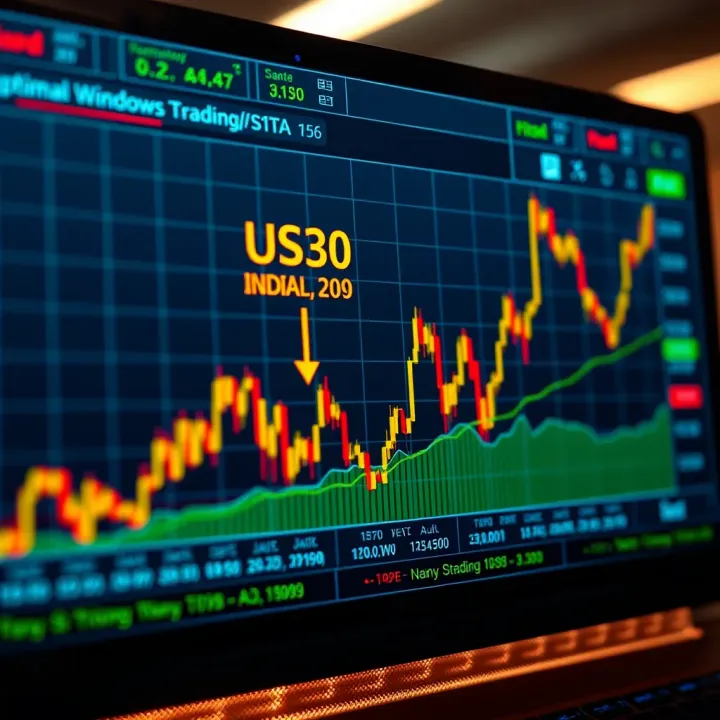
By understanding these core elements of the US30's trading environment, you equip yourself with the knowledge to navigate its price swings more effectively. This foundation sets the stage for mastering trading strategies tailored to the index’s unique rhythms.
Grasping global market hours is key to trading the US30 index effectively. Since US30 tracks 30 major US companies listed on the Dow Jones Industrial Average, its price movements largely depend on US market hours. Still, markets across London and Asia can influence the action through overlaps or reactions to news from their sessions. Knowing when these windows open and close helps traders spot moments of higher liquidity and volatility.
The main US stock market session runs from 9:30 am to 4:00 pm Eastern Standard Time (EST). This period sees the bulk of trading volume and liquidity, making it the prime time for US30 traders to capitalise on tighter spreads and clearer price trends. For example, traders in South Africa (SAST is two to seven hours ahead of EST, depending on daylight saving time in the US) might plan their best trading times around the evening hours when the US market is most active.
Trading during this window allows you to react promptly to scheduled economic data releases or corporate earnings reports that often occur before market open or during the session. Because most institutional investors trade during these hours, price moves tend to be more reliable and less erratic than during extended hours.
Outside regular market hours, US30 can still be traded in pre-market (typically 4:00 am to 9:30 am EST) and after-hours sessions (4:00 pm to 8:00 pm EST). Liquidity is thinner here, with wider spreads and greater price swings. This makes it riskier for inexperienced traders but can offer opportunities for sharp moves triggered by after-hours earnings or unexpected news.
For South African traders, this means early-morning or late-night sessions if they choose to trade in these extended times. Some prefer to avoid these periods due to unpredictable volatility, but others see it as a chance to position themselves ahead of the main session open.
When the US market opens, it overlaps with London’s market close for about an hour or two. This typically happens between 2 pm and 4 pm SAST. This overlap intensifies liquidity and volatility since traders from both markets are active simultaneously. It often results in noticeable price swings in US30 and creates richer trading opportunities.
For example, a headline in the UK could move European stocks just before US traders join in, leading to a quick reaction in US30 prices. South African traders can benefit by focusing on these overlap hours for potentially more predictable and substantial price action.
Though the Asian markets, including Tokyo and Hong Kong, operate hours before US trading, their influence on US30 is indirect but important. Often, overnight moves in Asian equities indicate sentiment and risk appetite, which then affects US futures and the morning US session.
A practical example: if Asian markets drop sharply due to geopolitical tensions or economic data, US30 futures might open lower, signalling a bearish start to the day. South African traders tracking Asian market news can prepare for how it might affect the US session, even if not trading during Asian hours themselves.
Understanding how US30 reacts to global market hours gives you an edge in timing your trades more effectively and managing risk around volatile periods. Adjusting your strategy to match these sessions is especially important given South Africa’s time difference and local market realities.
Understanding the periods when the US30 experiences heightened volatility and liquidity is key for effective trading. These windows offer more opportunities for price movements but also come with increased risks. Knowing when these periods occur helps traders decide when to enter or exit positions, manage risk and capitalise on market momentum.
Increased volume at open: The US stock market opens at 9:30 am EST, marking the start of intense trading activity. This opening period sees a surge in volume as investors react to overnight developments and position themselves for the day. For example, if corporate earnings or economic data were released after the previous day’s close, traders quickly adjust their strategies at market open. This spike in activity often leads to larger price swings, creating chances for short-term gains but also demands caution due to unpredictability.
Price swings near closing time: Like the open, the hour before the US market closes at 4:00 pm EST is notable for increased trading volume. Many institutional investors balance portfolios or execute trades based on daily performance targets. This can cause sharp directional moves or reversals in the US30 index. Traders watch this period closely to lock in profits or reposition for the next day, knowing that liquidity remains strong but volatility can spike unexpectedly.
Scheduled announcements: Regularly scheduled economic data releases, such as the US non-farm payrolls or Federal Reserve interest rate decisions, are highly anticipated market events. These announcements often trigger immediate and significant shifts in US30 prices as traders reassess risk and growth outlooks. For instance, a surprisingly strong jobs report usually pushes the index higher, while a weaker-than-expected figure can drag it down quickly. Planning trades around these known events helps manage risk and exploit volatility spikes.
Unexpected news events: Volatility also surges when unforeseen news breaks, like geopolitical incidents or sudden policy changes. These shocks cause rapid price reactions due to uncertainty and a scramble for information. For example, during sudden political developments or an unexpected Fed announcement, the US30 can swing sharply within minutes. Traders caught on the wrong side may suffer losses, but those prepared with stop-loss orders and flexible strategies can navigate these waves more confidently.
High volatility and liquidity periods are double-edged: they offer trading opportunities with larger price moves but require disciplined risk management to avoid costly mistakes.
Being aware of how market open and close times, alongside economic news, influence US30 trading is essential. For South African traders, converting these times to local South Africa Standard Time (SAST) ensures that they’re ready to engage during these crucial windows, maximising the potential for better entries and exits.
Timing plays a big role in trading the US30 index. The market’s behaviour shifts noticeably during different hours, so aligning trading strategies with these patterns can make a real difference in results. Whether you're chasing quick price moves or holding positions longer, knowing when to enter or exit trades tied to US30’s active periods helps manage risk and boost opportunities.
Advantages of trading during overlaps
Trading during the overlap of major market sessions, like the US and London markets, offers some of the most liquid and volatile moments for the US30. This period typically sees an uptick in volume and price swings, which is a goldmine for day traders looking to capitalise on short-term moves. For example, from 14:30 to 17:00 SAST (which corresponds to overlapping US and UK hours), traders often spot clearer entry points and tighter spreads.
Higher liquidity means narrower spreads and faster execution, essential for day traders dealing with big swings. Plus, news and economic data releases tend to cluster in these windows, pushing volatility up and creating opportunities to ride momentum.
Managing risks during volatile periods
That said, more volatility also means more risk. Sharp price moves can trigger stop losses quickly or create gaps if you’re caught off guard by surprises like unexpected economic announcements. Effective risk management becomes critical; setting stop losses wisely and sizing positions according to volatility helps prevent big losses.
For instance, when trading during the US market open or major news releases, it pays to reduce trade size or consider wider stops to avoid being prematurely stopped out. Day traders also tend to avoid overtrading during choppy conditions where the market lacks clear direction.
Using technical indicators
Swing traders usually take positions for several days or even weeks, so they often operate outside of the US30’s busiest hours. Technical indicators — such as moving averages, RSI (Relative Strength Index), and Fibonacci retracements — become critical in spotting trends and potential reversal points without needing to watch every tick.
For example, a swing trader might use the 50-day moving average to identify the general trend and RSI to determine if the index is overbought or oversold. These indicators work well in quieter periods, offering signals to open or close positions based on established patterns instead of intraday volatility.
Waiting for confirmation signals
Swing trading also requires patience in waiting for confirmation before committing capital. This might mean waiting for a daily close above a key resistance level or a candlestick pattern that signals momentum shift. Rushing in too early can lead to entering trades against the broader trend.
Confirmation filters out false signals that surface in thin markets or uncertain periods outside peak sessions. For instance, after spotting a potential breakout, a swing trader might wait for volume to pick up or additional technical signals to back the move before going in.
A well-timed trading strategy doesn't just improve entries and exits — it lets you keep your head when the market noise ramps up, especially for complex, high-profile indices like the US30.
Focusing on when to trade — whether during high-volume overlaps or calmer off-hours — adds an important layer to any trader’s approach.
Trading the US30 index from South Africa requires more than just understanding US market hours and volatility. Practical adjustments for local conditions will improve your timing and trading decisions. This means factoring in time differences, costs, connectivity, and finding the right broker — all vital for effective trades on this popular US market indicator.
Converting EST to SAST is a key step for South African traders. The US Eastern Standard Time (EST) is usually 7 hours behind South African Standard Time (SAST). For example, when the New York Stock Exchange opens at 09:30 EST, it is already 16:30 SAST, which often falls outside regular business hours locally. Being precise about this conversion ensures you catch main market moves without confusion.
Planning trades around local time means scheduling your trading activity during practical hours. If the US market closes at 16:00 EST (23:00 SAST), this means late evening trading for those in South Africa. Some traders may prefer early mornings local time when US markets are quieter, shifting strategies to swing trading or after-hours adjustments. Using a clear timetable to align your trading with US peak periods helps avoid mistimed orders or missed opportunities.
Data costs and connectivity can pose challenges for South African traders. Market data subscriptions for indices like US30 may come with fees, increasing trading costs. Reliable, high-speed internet is essential too, as delays or dropped feeds skew real-time prices and order execution. For instance, a trader in Johannesburg relying on mobile data with intermittent coverage risks poor timing on volatile market moves. Budgeting for quality data and ensuring consistent connectivity will reduce such risks.
Broker selection and spreads often influence overall trading profitability. South African traders need brokers who offer access to US30 with competitive spreads and transparent fees. Some local brokers may offer accounts in Rand but with wider spreads, while international brokers could provide tighter spreads but charge additional forex conversion fees. Comparing brokers on these factors, plus their trading platforms and support, ensures you don’t bleed money unnecessarily on costs rather than market moves.
Tailoring your approach to fit South African realities — time zone differences, data costs, and broker details — can make all the difference when trading the US30 index successfully.
These practical tips help South African traders align their activities with the US trading day and local constraints, enhancing chances of profitable trading while managing risks effectively.
Explore what step index means in fiber optics 📡, its unique features, performance benefits, and how it applies beyond optics in tech and engineering fields.

Explore the step index strategy in optical fibers 📡: learn how its structure shapes light flow, boosts signal quality, and compares with other fiber types.

📘 Get a clear understanding of the Step Index Strategy in PDF format. Learn practical tips to apply this method effectively across different fields. 🔍
📈 Discover smart trade strategies, tech tools, and risk management tips tailored for South African traders to make smarter, profitable decisions today!
Based on 7 reviews