

Peer-to-Peer Trading Explained: A Practical Guide
Explore peer-to-peer trading in South Africa 🔄 Learn how it works, its risks, benefits, and tips to trade safely in this growing market.
Edited By
Olivia Bennett
Binary trading apps have been gaining traction among South African traders looking for quick, straightforward ways to engage financial markets. These apps let you predict if an asset's price will rise or fall in a short period. Essentially, it’s a bet on price movement, rather than owning the asset itself.
South African users are drawn to binary trading mainly for its simplicity and the potential for fast returns. Unlike traditional stock trading that can require deeper analysis and longer timeframes, binary options condense trading decisions into a simple yes-or-no format: will this asset be above a certain price at a specific time? If you’re right, you get a pre-agreed payout; if you’re wrong, you lose your stake.
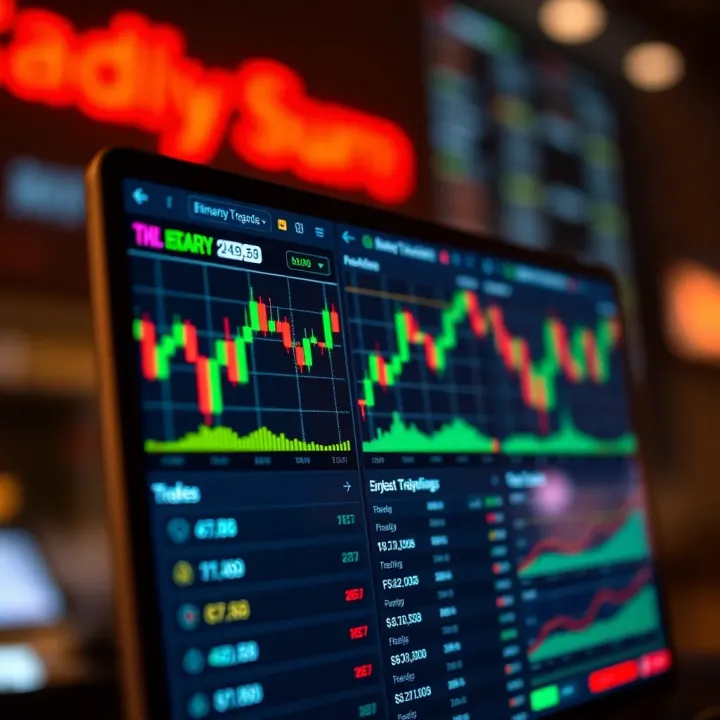
Here’s how it works in practice:
Choose an asset: This could be shares of companies listed on the JSE, commodities like gold, or currency pairs such as USD/ZAR.
Decide the expiry time: Binary trades can last from 60 seconds up to several hours.
Place your bet: Predict whether the asset’s price will be higher or lower than the current level once the timer runs out.
That said, while the concept sounds straightforward, it’s vital to understand the risks involved. Binary trading is high risk because the outcome is all or nothing. Small market movements might mean losing your entire investment on a single trade.
Binary trading isn’t investing in the traditional sense; it’s more like speculation or betting. Treat it as such and never trade with funds you can’t afford to lose.
South African traders should also consider local regulatory conditions. The Financial Sector Conduct Authority (FSCA) monitors these activities, but many binary apps operate offshore and may not comply fully with South African laws. This makes due diligence crucial before committing funds.
In short, binary trading apps offer an accessible route into financial markets for South Africans, especially those comfortable with rapid decision-making and who understand the risks. Later sections will break down how to pick a trustworthy app, what to look out for legally, and ways to manage your risk while trading.
Understanding these basics sets the stage for making informed choices in this fast-paced market niche.
Binary trading apps serve as digital platforms that allow users to buy and sell binary options directly from their mobile devices. Their growing popularity in South Africa stems from their straightforward approach to trading, making them accessible even to those who aren’t seasoned investors. Unlike conventional shares or forex trading, these apps simplify the process by offering a clear win-or-lose outcome on asset price predictions.
For South African traders, these apps offer quick entry points to test trading strategies without the hassle of complex processes. They’re particularly appealing due to mobile compatibility, real-time trading, and user-friendly interfaces that streamline market participation. However, understanding what these apps entail is vital before committing real money.
Defining binary options: At its core, a binary option predicts whether the price of an asset will end up higher or lower than a given price at a specific time. The term “binary” refers to the two possible outcomes — either you gain a fixed payout if your prediction is correct or lose your stake if it’s wrong. For practical purposes, think of it like betting on a horse race but with financial markets instead.
This simplicity means that traders do not buy the asset itself but rather place a bet on price movement within a limited period. For example, if you predict the price of gold will rise in the next hour and it does, you receive a predetermined return.
How binary trades differ from traditional investments: Unlike traditional investing, where returns depend on asset price changes over time and can vary considerably, binary trading fixes the payout and potential loss upfront. This means you know exactly how much you can make or lose before placing a trade. It eliminates the complexities of owning and managing assets but also means you’re effectively gambling on short-term price movements.
Traditional investments like shares or bonds involve ownership, dividends, or interest income, and can be held indefinitely, offering long-term growth potential. Binary trading, contrastingly, focuses on quick trades with clear expiry times, often minutes to hours.
Placing trades via apps: These apps simplify placing trades by allowing you to select an asset, choose whether the price will go up or down, and set the amount you want to risk. The app then executes your trade instantly. For instance, you could bet R500 that the price of crude oil will increase in the next 15 minutes. The app provides a countdown timer until expiry, after which your trade outcome is clear.
South African users appreciate that these apps work seamlessly on mobile devices, enabling trading on the go, whether commuting or during breaks. Notifications and alerts inform users about trades nearing expiry or market movements.
Payout structures and expiry times: Payouts in binary trading are usually fixed and clearly displayed before committing. A typical payout might be 70% return on your investment if correct. So, risking R1,000 could yield R1,700 if the prediction is right; if wrong, you lose the R1,000 staked.
Expiry times are pre-set and short, ranging from 30 seconds to several hours. Choosing the right expiry is crucial because market volatility can heavily influence the outcome in the very short term. For example, a trader opting for a 5-minute expiry on a volatile currency pair like USD/ZAR needs to keep a sharp eye on sudden swings.
Understanding these core elements helps South African traders approach binary trading apps with realistic expectations about risks and rewards. The quick, binary nature of outcomes makes these apps unique, but they require careful consideration and strategy.
When selecting a binary trading app, certain features become dealbreakers rather quickly. These elements affect your experience, how easily you can place trades, and ultimately your success in navigating the markets. For South African traders, who often juggle data costs, mobile usage, and regulatory nuances, finding an app that ticks all the right boxes matters plenty.
Ease of navigation is one of the first things to test. An app cluttered with confusing menus or hidden functions wastes your time and can cause costly mistakes. Look for clear layouts where you can spot key info like asset prices, trade options, and account balance at a glance. For example, brokers with simple dashboards that show active trades alongside quick links to recent results tend to empower users rather than overwhelm them.
Mobile compatibility is essential, especially for South Africans who rely heavily on smartphones for internet access. Your app should perform smoothly on both Android and iOS without crashes or needless delays. Fast loading times and a responsive design that fits different screen sizes contribute to better trading on the go. Consider apps that support offline viewing of charts or notifications about market movements, as these features add convenience without eating too much data.

Having access to charts and indicators within the app can make a significant difference. Charts help you spot trends and make educated guesses about asset movements. Popular indicators like moving averages or relative strength index (RSI) can be overlaid for quick analysis. For instance, an app that lets you switch between candlestick and line charts on your mobile can suit traders preferring visual or simpler data presentations.
Meanwhile, tutorials and demos offer a no-risk way to learn the ropes. Moving from theory to practice is much smoother if the app includes step-by-step guides or video tutorials tailored for beginners. Demo accounts give you a chance to try strategies without risking real money – a vital feature if you're new to binary trading or testing a new app's capabilities.
When it comes to deposit and withdrawal methods in South Africa, flexibility counts. Check whether the app supports common local options like EFT (electronic funds transfer), credit/debit cards, or popular e-wallets such as PayFast or Skrill. Fast and transparent withdrawals are crucial to avoid headaches around accessing your funds.
Understanding demo versus live accounts is another key point. Demo accounts mimic real trading conditions but use virtual funds, letting you build confidence before moving to live trades. Live accounts, naturally, involve actual money with real profits or losses. Reputable platforms allow you to switch between the two easily so you can practise without climbing in blind.
Choosing an app with the right mix of usability, tools, and local payment options can save you time, money, and frustration. It's not just about trading; it's about having a reliable companion that suits your style and realities.
By paying attention to these key features, you'll be better positioned to pick a binary trading app that aligns with your needs as a South African trader. This groundwork is vital before diving into actual trading, especially considering local market conditions and regulatory factors.
Binary trading apps may offer simple entry points into financial markets, but they come with significant risks worth understanding before you commit any money. This section shines a light on the most critical dangers and limitations faced by users, aiming to give you practical knowledge to help avoid unnecessary losses or scams.
Binary trading is inherently risky because the outcome is an all-or-nothing scenario. You either gain a fixed payout or lose your entire stake, often within minutes. Unlike traditional investing, where long-term growth or dividends might cushion losses, binary options offer no middle ground. Consider a South African trader who invests R1,000 on a currency pair predicting it will rise within 15 minutes. If the market moves just slightly against the prediction, the whole R1,000 could be lost immediately. This rapid exposure to full losses requires careful money management and clear acceptance that losses can happen fast and often.
Price movements in markets relevant to binary trading—like forex or commodities—can be highly volatile. Volatility means prices swing quickly and unpredictably, which can both create opportunity and increase risk. For example, sudden news about global economic shifts or political instability in the region can cause prices to jump unusually, affecting expiry outcomes unexpectedly. Traders using apps during these volatile periods may find their predictions undone in seconds by sharp price jumps, making it tough to consistently call trades correctly. This underscores the need to understand market conditions, especially when relying on short expiry times common in binary trading apps.
Unfortunately, the binary trading space attracts unscrupulous operators due to its online nature and quick turnover of funds. Some apps have been caught manipulating prices, delaying withdrawals, or disappearing with users’ money. A typical scam involves promising unrealistic returns or pressuring users to deposit more funds with little transparency. South African traders should be wary of apps that lack clear contact details, offer bonuses with hidden conditions, or push aggressive marketing tactics. Verifying an app's track record and reading genuine user experiences can help avoid falling victim.
South Africa’s Financial Sector Conduct Authority (FSCA) has not officially approved local trading of binary options via apps, leaving a regulatory grey area. Many international binary trading platforms operate without FSCA oversight, so South Africans trading on these apps have limited consumer protection. This gap means there’s little recourse if disputes arise or fraud occurs. It also increases the risk of market manipulation by unregulated operators. While some overseas licences might suggest legitimacy, they don't guarantee fairness or safety for South African users. Traders should understand this risk clearly before engaging with any binary trading app.
Always treat binary trading as high-risk and only using money you can afford to lose. Confirm the app’s trustworthiness and understand the local regulatory environment to avoid costly errors.
In summary, binary trading apps offer easy access but come with high financial risk, price volatility challenges, threats from potential scams, and a lack of robust local regulation. Keeping these factors in mind will help you make informed decisions suited to your appetite for risk.
Understanding the legal framework around binary trading apps in South Africa helps traders make informed decisions and avoid unexpected pitfalls. Given the complexities and evolving nature of financial regulations, awareness of the legal standing offers practical protection and clarity.
The Financial Sector Conduct Authority (FSCA) governs financial services and markets in South Africa, ensuring investor protection and market confidence. While the FSCA explicitly regulates financial products like shares, derivatives, and forex, the binary options market remains a grey area. Currently, no South African-licensed entity offers binary options trading, and some past providers were banned due to the high risk and potential for fraud.
For South African users, this means that any binary trading platform without FSCA approval operates outside local regulatory protection. In practice, this leaves traders vulnerable if disputes arise, as the FSCA cannot intervene or offer compensation. The Authority also warns publically against unregulated binary trading, a stance worth heeding given the lack of investor safeguards.
Most South Africans using binary trading apps connect with international companies, often based in jurisdictions with varying regulatory standards. Some platforms hold licences from reputed authorities like the UK’s FCA, CySEC in Cyprus, or Australia’s ASIC, which offer a degree of oversight.
However, South African law does not automatically recognise these licences, and the FSCA does not monitor these foreign operations locally. Traders should be cautious and carefully verify any such international regulation claims. The lack of FSCA enforcement means resolution against such platforms can be complicated and may require pursuing issues via foreign legal systems.
One major legal risk is trading through unlicensed platforms or those that skirt South African regulations. This practice is not illegal for the user per se, but it exposes traders to platforms that may not respect fair trading rules or data privacy laws like the Protection of Personal Information Act (POPIA).
Moreover, using platforms that do not follow FSCA rules can lead to problematic outcomes — from withheld withdrawals to misleading marketing. Traders must also be alert to scams masked as legitimate services. Checking for FSCA registration and reading up on regulatory warnings can save a lot of trouble.
Profits from binary trading are taxable in South Africa. The South African Revenue Service (SARS) treats trading income as either capital gains or ordinary income, depending on individual circumstances. Frequent traders or those treating binary trading as a business will likely pay income tax on profits, while casual investors might face capital gains tax (CGT).
Importantly, SARS requires accurate record-keeping of trades, deposits, withdrawals, and platform details. Traders should declare earnings during tax season to avoid penalties. Given SARS’s increasing scrutiny of online and international income sources, ignoring tax obligations risks fines or audits.
Navigating binary trading safely in South Africa means balancing opportunity with caution — absorbing regulatory realities, spotting legal pitfalls, and understanding tax duties. Ignorance of these aspects can cost more than just money.
Understanding these legal elements equips South African traders to choose platforms wisely and comply with local laws. While the lure of binary trading is strong, clear-sightedness about the legal and tax environment keeps your trading on firmer ground.
Choosing the right binary trading app matters a lot, especially in South Africa where the market is crowded with options, some more trustworthy than others. A reliable app not only protects your investments but also offers a smoother trading experience with clear, honest information. You want an app that respects local regulations, offers transparent terms, and provides sturdy security for your funds and personal data.
The Financial Sector Conduct Authority (FSCA) regulates financial services in South Africa. If you're eyeing a binary trading app, see if it holds FSCA approval or authorisation. While many international binary platforms aren't fully regulated locally, FSCA registration means the app adheres to South African standards on client protection and financial transparency. An app licensed by FSCA reduces risks of fraud and provides some legal recourse if things go sideways.
Some reliable platforms carry licences from other respected authorities, like the UK’s Financial Conduct Authority (FCA), Cyprus Securities and Exchange Commission (CySEC), or Australia’s ASIC. These licences aren't foolproof guarantees but suggest the app is subject to oversight and regular audits. For South African traders, apps with reputable international licences may offer additional safeguards, but always cross-check that they comply with local laws to avoid legal hiccups.
User reviews can be insightful, but not all are created equal. Look for feedback on independent sites that don’t allow paid or fake reviews. Forums like MyBroadband or financial blogs specialising in South African investing provide honest takes. Reviews should cover factors like ease of use, customer support, deposit and withdrawal reliability, and app stability during high-market volatility.
Beware of apps with lots of complaints about withdrawal delays or unexplained account freezes. Also, watch for overly aggressive upselling or promises of guaranteed returns—trading always carries risk. If users mention poor communication, hidden fees, or non-transparent terms, take a step back. These signs often point to platforms you’d rather avoid.
Most reputable binary trading apps offer demo accounts that use virtual money. These allow you to familiarise yourself with the app’s interface and trading mechanics without risking your own rand. For South African traders, practising on a demo account is a smart move before committing real funds, especially during peak loadshedding hours when connectivity might be patchy.
Demo accounts don’t just help you learn trading; they also let you test app performance on your mobile or desktop. Notice if the app runs smoothly, how fast it updates prices, and if orders execute swiftly. A laggy or glitchy app can cost real money in a volatile market. Use the demo period to check if the app meets your expectations before you stake your capital.
Picking a well-regulated, well-reviewed app and testing it thoroughly can save you a fair amount of headaches. Take your time and trade smart.
Explore peer-to-peer trading in South Africa 🔄 Learn how it works, its risks, benefits, and tips to trade safely in this growing market.

📊 Explore Quotex trading made simple! Learn how South African traders can set up accounts, use trading tools, manage risks, and weigh pros and cons before starting.

Explore Pocket Option's features, trading tips, risk management, payment options, and legal info tailored for South African traders 📈🇿🇦

🤖 Discover how robot trading apps work in South Africa, their pros and cons, regulatory tips, and how to pick a trustworthy platform for smarter investing.
Based on 15 reviews