
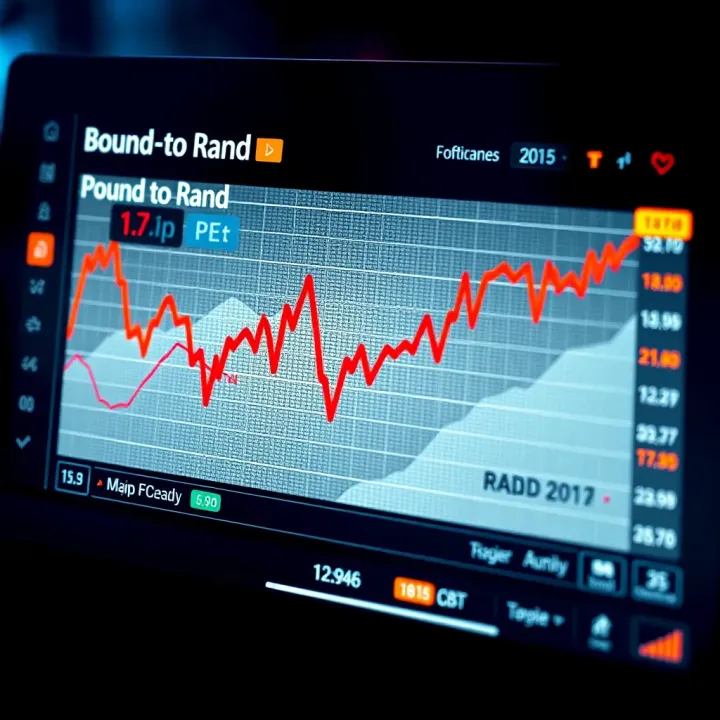
Pound to Rand Exchange Rate Trends and Forecast
📉 Explore key factors shaping the Pound to Rand rates, including economic data and political events. Stay ahead in trade, investment & travel decisions!
Edited By
Emily Wells
The euro to dollar exchange rate stands as a crucial gauge for global financial markets, influencing everything from corporate earnings to import costs in South Africa. This currency pair doesn't move without cause; its fluctuations reflect shifting economic conditions, central bank decisions, and geopolitical developments.
Understanding these factors is key for traders and investors aiming to navigate the forex market effectively. For example, when the European Central Bank adjusts its interest rates, it can strengthen or weaken the euro against the dollar, which in turn impacts international trade and investment flows.

Moreover, events like trade negotiations, conflicts, or unexpected economic data releases often sway market sentiment and push the euro-dollar rate beyond what economic fundamentals might suggest. For instance, a tense political situation within the EU or the US can trigger rapid shifts in exchange rates as investors seek safety or better returns.
Currency markets respond not just to hard data, but also to moods and perceptions. Keeping an eye on both economic indicators and geopolitical signals provides a fuller picture.
Key influences to watch include:
Economic indicators: GDP growth rates, employment data, inflation figures.
Monetary policies: Interest rate changes, quantitative easing moves by the ECB and the Federal Reserve.
Geopolitical events: EU political stability, US fiscal policies, global trade agreements.
Market sentiment: Risk appetite among investors, safe-haven demand.
This article will break down these drivers and shed light on their interaction, helping you make informed decisions based on a realistic understanding of what moves the euro to dollar rate. Whether you’re a forex trader managing risk or a financial analyst assessing exposure, the insights provided here aim to support your strategies with clear, actionable knowledge.
Grasping the fundamentals of the euro to dollar exchange rate is essential for anyone involved in forex markets or international trade. This exchange rate affects businesses pricing imports and exports, investors managing currency risks, and analysts forecasting economic trends. Without a solid understanding, it’s easy to misinterpret market moves or make poorly informed decisions.
Supply and demand dynamics determine exchange rates in real time. When demand for the euro rises, caused perhaps by increased European exports or investment inflows, the euro strengthens against the dollar. Conversely, higher demand for the dollar—say due to a flight to safety amid global uncertainty—pushes the euro lower. For example, if US investors see trouble ahead and move funds into dollar-denominated assets, this could cause a sharp euro depreciation.
Interest rate differentials also play a big role. Money tends to flow towards currencies offering higher yields. If the European Central Bank (ECB) raises interest rates while the US Federal Reserve holds steady or cuts rates, the euro generally appreciates against the dollar. The reverse often applies too. In practical terms, traders monitor central bank policy announcements closely, as even subtle hints about future rate moves can shift exchange rates.
Economic fundamentals like GDP growth, inflation, and trade balance shape long-term currency trends. If the Eurozone shows solid economic growth and stable inflation close to targets, its currency may gain ground. On the other hand, persistent economic weakness or rising debt levels can weaken the euro versus the dollar. The steady US economy and labour data often provide a strong base for the dollar, affecting how the pair moves.
The reserve currency status of both the euro and dollar supports their global demand. The US dollar remains the dominant reserve currency, accounting for over 60% of global foreign exchange reserves, while the euro follows as the second. Central banks hold these currencies to stabilise their own economies and facilitate trade. Thus, any shift in reserve preferences can have significant short and medium-term effects on the EUR/USD rate.
Trade relationships between the US and Eurozone strongly influence currency flows. The EU is one of the US’s top trading partners, resulting in constant cross-border money movement for goods, services, and investments. Large trade surpluses or deficits can push currencies up or down. For instance, if Europe's exports to the US surge, the euro might strengthen because American buyers need euros to pay for those goods.
Market liquidity and volatility make trading the euro-dollar pair attractive but also unpredictable. EUR/USD is the most heavily traded forex pair, reflecting deep markets and vast daily volumes. This liquidity generally keeps spreads tight but also means exchange rates can react quickly to economic data or geopolitical news. Traders and investors benefit from the ability to enter or exit positions easily, but must be mindful of volatile swings during major announcements or crises.
Understanding these basic mechanisms equips traders and investors to better anticipate EUR/USD movements and manage their exposures efficiently. Awareness of supply-demand shifts, interest rate moves, and global market roles helps make sense of exchange rate fluctuations beyond mere speculation.
Understanding key economic factors is crucial when analysing the Euro to Dollar (EUR/USD) exchange rate. Traders, investors, and financial analysts monitor these indicators closely, as they offer insights into the relative health and stability of the Eurozone and US economies. Shifts in these indicators often lead to currency adjustments, affecting forex positions and broader investment outcomes.
GDP trends provide a fundamental snapshot of how both economies are performing. Gross Domestic Product (GDP) figures, released quarterly, reflect the total value of goods and services produced. A stronger GDP growth in the US compared to Europe, for example, often signals a robust economy and may attract investors toward the dollar, strengthening its position against the euro. Conversely, if the Eurozone posts steady or accelerating growth while the US slows down, this balance can shift the exchange rate favorably for the euro.
Take the recent example where the US faced a slowdown due to higher interest rates aimed at cooling inflation, while parts of Europe experienced gradual recovery post-pandemic restrictions. Such dynamics explain the typical exchange rate fluctuations traders see on their screens.
Inflation pressures and targets also weigh heavily on the EUR/USD pair. Both the European Central Bank (ECB) and the Federal Reserve (Fed) aim to keep inflation near their targets—usually around 2%. When inflation in the US spikes, the Fed is likely to hike rates to tame prices, boosting the dollar as higher rates attract foreign capital. Meanwhile, if the Eurozone struggles with lower inflation or deflationary risks, its currency might weaken in comparison.
For instance, the persistence of energy price shocks in Europe can increase inflation pressure, forcing the ECB to consider tighter monetary policy earlier than expected. Such shifts impact the euro’s value directly and should be closely monitored by anyone trading or analysing the pair.
Labour market conditions provide another layer of insight. Strong employment figures in the US, including growing participation rates and job creation, often underpin a robust economy. This typically hints at potential interest rate hikes, strengthening the dollar. On the other hand, sluggish or stagnating job markets in the Eurozone—where youth unemployment remains high in some countries—can dampen the euro’s appeal to investors.
Wage growth and unemployment rates closely follow these trends. Declining unemployment coupled with rising wages in the US can fuel consumer spending and economic momentum, pushing the dollar’s value higher. In contrast, persistent unemployment in parts of Europe may slow wage growth, impacting domestic demand and economic confidence.
Keep an eye on monthly US non-farm payroll figures and Eurozone employment reports: these numbers often move EUR/USD significantly within short trading windows.
In practical terms, currency traders in Johannesburg or Cape Town who can interpret these economic reports swiftly stand a better chance of making profitable decisions in the forex markets. For investors globally, understanding these factors helps frame expectations and manage risk in the EUR/USD currency pair effectively.
By tracking GDP trends, inflation pressures, and labour market data in both regions, market participants get a clearer picture of which currency might gain or lose ground next. This knowledge not only informs daily trading choices but also longer-term investment strategies grounded in real economic conditions.
Monetary policy plays a significant role in shaping the euro to dollar exchange rate, influencing both short-term fluctuations and longer-term trends. Central banks, chiefly the European Central Bank (ECB) and the Federal Reserve (Fed), steer their economies through tools like interest rates and asset purchases, which directly affect currency supply, demand, and investor confidence. Traders and investors watch these decisions closely, as shifts in policy can alter capital flows between Europe and the US, thereby impacting the exchange rate.
The ECB’s choices around interest rates strongly impact the euro’s value. When the ECB raises rates, euro-denominated assets typically become more attractive, leading to stronger demand for the euro. Conversely, lowering rates tends to weaken the euro as yields on investments drop. For instance, during the heightened inflation period in early 2023, the ECB’s cautious rate hikes aimed at taming inflation helped solidify euro strength against the dollar. That said, any hint that the ECB might pause or reverse hikes can trigger depreciation, as traders reassess the appeal of euro assets.
Quantitative easing (QE) involves the ECB buying financial assets to inject liquidity and stimulate growth. When active, QE increases euro supply, generally putting downward pressure on the exchange rate. The ECB scaled back its asset purchase programme in late 2022 as inflation concerns mounted, signalling a tightening stance and contributing to euro appreciation. On the other hand, sudden announcements to resume or increase QE can spook markets, triggering a drop in the euro’s value. For currency traders, monitoring QE signals provides crucial clues about future euro trends.
The Federal Reserve’s interest rate moves are equally pivotal for the euro/dollar pair. Rate hikes typically boost the dollar by attracting yield-seeking capital, while rate cuts tend to weaken it. For example, the Fed’s accelerated rate hikes during 2022 to combat inflation pushed the dollar to multi-decade highs, weighing heavily on the euro. Since then, any signs of the Fed pausing or slowing rate hikes have been closely watched for indications of potential dollar weakness.
Beyond immediate rate moves, the Fed’s communication shapes market expectations and therefore the euro/dollar dynamic. Clear forward guidance about future rate paths helps reduce volatility and guides investors, whereas mixed signals can lead to swings. For instance, when the Fed in late 2023 stressed caution about further hikes, this tempered dollar strength despite solid economic data. Traders often parse speeches and minutes to anticipate shifts well before they happen, using this insight to position their currency trades accordingly.
Monetary policy decisions and statements are among the most closely monitored drivers of the euro to dollar exchange rate, directly influencing investment flows, market sentiment, and the relative attractiveness of each currency.
Actionable takeaways for forex participants include regularly reviewing ECB and Fed announcements, watching inflation and economic data that influence their decisions, and closely following central bank communication to anticipate currency movements. This focus offers a practical edge in navigating the volatile EUR/USD pairing.
Geopolitical events and external factors play a big role in shaping the euro to dollar exchange rate. These events influence investor confidence and risk appetite, which in turn affect currency flows. For traders and investors, paying attention to these factors can help anticipate sudden shifts driven by political decisions or international relations rather than just economic data.
Trade tensions have marked US-EU relations over the past few years, notably with disputes over tariffs on steel and aluminium imports. For example, the US imposed tariffs on some EU products, claiming unfair subsidies to European industries. In retaliation, the EU set tariffs on US goods such as motorcycles and Kentucky bourbon. Such disputes tend to increase market uncertainty, causing fluctuations in the euro-dollar rate as investors reassess the potential impact on trade volumes and economic growth.
An active trade dispute often means companies delay purchases or reroute supply chains, which affects cross-border transactions in euros and dollars. Forex traders should watch these tensions closely as even small escalations can tilt market sentiment towards the safe-haven US dollar or dampen demand for the euro.
The flip side is the ongoing negotiation efforts to ease trade frictions. Talks focusing on reducing tariffs and agreeing on digital taxation could foster improved economic cooperation. If successful, such agreements typically boost the euro by signalling lower trade barriers and stronger EU-US ties.
Conversely, unresolved issues — like disagreements over tech regulations or aircraft subsidies — risk reigniting tensions. These can trigger short-term swings or prolonged pressure on the euro, as uncertainty weighs on European exports and investor confidence.
Political stability in the Eurozone matters greatly for the euro's strength. Key elections — in countries like Germany, France, or Italy — can introduce uncertainty if outcomes are unclear or if populist parties gain traction. For example, Italy’s political jostling has historically rattled the euro due to concerns about fiscal discipline.
Investors tend to prefer predictable policy environments; hence, political upheaval often drives a demand for the dollar as a safer option. Traders should monitor electoral calendars and coalition talks since surprises here can quickly affect the euro exchange rate.
Similarly, US political events also ripple through the forex market. Changes in administration policies, fiscal stimulus plans, or debt ceiling debates tend to sway the dollar. For instance, when congressional negotiations around budget or infrastructure packages stall, volatility in USD pairs usually spikes.
Stable US political conditions generally support dollar confidence, nudging the euro lower against it. On the other hand, political gridlock or unexpected shifts might weaken the dollar, giving the euro room to strengthen. Traders should consider how US news might interact with European developments, as combined uncertainties can amplify currency moves.
Tracking geopolitical and external events helps make sense of unexpected euro to dollar exchange rate shifts, providing a sharper edge for decision-making in volatile markets.
Market sentiment and technical factors often shape short-to-medium-term movements in the euro to dollar exchange rate. Unlike economic fundamentals or geopolitical events, these reflect investors’ collective psychology and trading behaviour. For traders and analysts, understanding these elements can provide timely clues about potential shifts in the pair’s direction, helping with entry and exit decisions.
Safe-haven demand plays a significant role in the euro-dollar pair, especially during periods of global uncertainty. When risk aversion spikes — like during a geopolitical crisis or financial turmoil — investors tend to flock to the US dollar for safety. The dollar is seen as a reliable refuge due to the size and stability of the US economy, plus its status as the world’s premier reserve currency. For instance, during the early months of the COVID-19 pandemic in 2020, the dollar strengthened sharply as investors pulled money from riskier assets.
This safe-haven demand often causes the euro to weaken against the dollar, regardless of European economic data or ECB moves. However, when global confidence returns, appetite for risk grows and investors might switch back to the euro or other currencies. South African traders need to watch global risk sentiment closely since these swings can trigger volatile moves in the USD/ZAR pair as well.
Speculative trading patterns also influence the euro-dollar rate, reflecting the behaviour of hedge funds and large institutional players who chase short-term gains. They use technical signals, news, and momentum to enter and exit positions rapidly. This speculative activity can exaggerate price trends or cause sudden reversals. For example, if a critical technical level breaks, traders might pile in quickly, pushing the euro either higher or lower against the dollar.
Such patterns mean the pair’s price often moves beyond what fundamentals alone justify, creating opportunities and risks. Staying tuned to market sentiment indicators like the Commitment of Traders (COT) report or options market skew can provide insight into speculative positioning.
Support and resistance zones are fundamental in technical analysis for the euro to dollar exchange rate. Support refers to price levels where buying interest is strong enough to halt a decline, while resistance marks levels where selling pressure prevents further gains. These zones often correspond to previous highs or lows, psychologically significant numbers (like 1.1000 on EUR/USD), or areas of high trading volume.
For traders, recognising these zones is essential as prices often bounce from support or pull back from resistance. For example, if the euro approaches a strong support zone near 1.0500, buyers may step in anticipating a rebound, while a break below could signal further losses.
Trend patterns and technical indicators highlight the direction and momentum of the exchange rate. Moving averages, Relative Strength Index (RSI), and MACD are commonly used tools. A rising moving average signals an uptrend, while RSI readings above 70 suggest overbought conditions that might lead to a correction.
For instance, a trader noticing the euro/USD pair hitting overbought RSI levels and nearing resistance might prepare for a reversal or tighten stop-losses. Conversely, consistent higher highs and higher lows combined with supportive indicators can encourage holding long positions.
Tip: Combining market sentiment with technical analysis gives a richer picture of potential price action, making your approach more adaptive and grounded.
In summary, market sentiment and technical factors provide a window into how traders and investors feel about the euro to dollar pair in real-time. Paying close attention to safe-haven flows, speculative behaviour, and price patterns will help traders and analysts respond more effectively to changing market conditions.
📉 Explore key factors shaping the Pound to Rand rates, including economic data and political events. Stay ahead in trade, investment & travel decisions!

📉 Dive into Rand-Dollar trends with a detailed look at economic factors, geopolitical events & market sentiment shaping South Africa’s currency future.
📈 Explore NZD to ZAR trends, economic factors, and key events shaping the exchange rate. Get expert insights and risk tips for South African traders.
📉 Get insights on the South African Rand to Indian Rupee exchange rate forecast with market trends, economic factors & expert views for smarter decisions.
Based on 15 reviews