
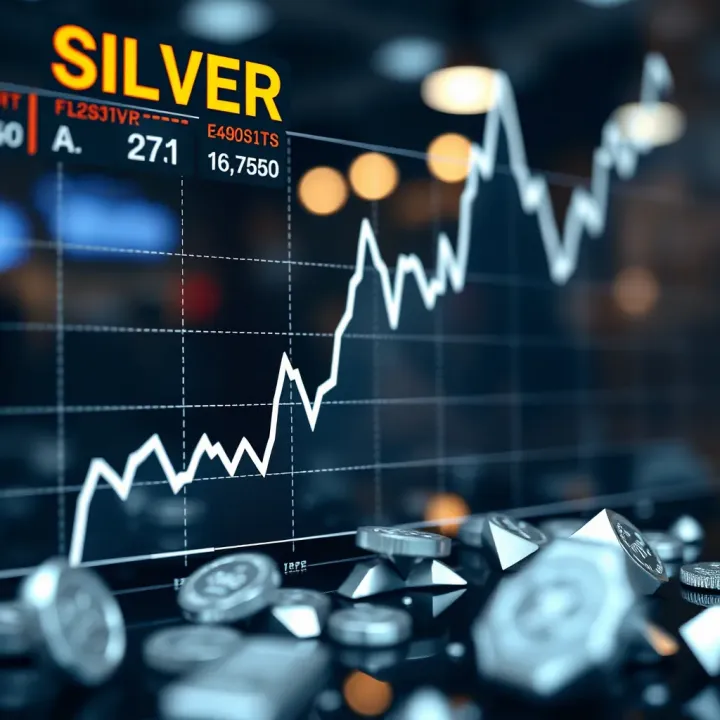
Latest Trends and Insights in the Silver Market
Explore the latest silver market trends, price factors, and investment insights. Understand silver's industrial role and impacts on South Africa's economy 💰🌍
Edited By
James Carter
Gold and silver have been part of human wealth and culture for thousands of years. Their unique properties—such as resistance to corrosion and excellent conductivity—make them valuable not just as jewellery but also in various industrial and financial sectors.
In South Africa, these metals carry special significance due to the country's rich mineral reserves and long history in mining. Investors often turn to gold and silver as a means to protect wealth against inflation and currency fluctuations, especially given the rand’s volatility. Yet, understanding their market dynamics is key to making informed decisions.
Both metals serve distinct but sometimes overlapping purposes. Gold remains a popular safe haven asset, frequently sought after during times of economic uncertainty. Silver, while also used for investment, finds wider use in industries like electronics, solar panels, and medical equipment. This dual demand impacts their pricing and investment potential differently.
While gold is often seen as a store of value, silver’s role as an industrial metal can lead to greater price swings, presenting both opportunities and risks.
This article will cover practical insights on investing in gold and silver, shedding light on factors affecting their market prices, industrial uses, and considerations tailored to South African investors interested in diversifying their portfolios. Whether you’re a trader, financial consultant, or simply want a clearer understanding, these metals can play a noteworthy role in your investment strategy.
Gold and silver stand out due to their unique physical attributes. Gold has a density of around 19.3 grams per cubic centimetre, making it noticeably heavier than silver, which registers roughly 10.5 grams per cubic centimetre. This significant difference affects their use; for instance, gold’s heft lends a luxurious feel in jewellery, while silver’s lighter weight makes it more practical for larger decorative pieces. Their colours are also distinctive: gold boasts a warm yellow hue, whereas silver shines with a bright, white metallic sheen. Both metals are highly malleable and ductile, allowing artisans to craft intricate jewellery or fine coins without fear of cracking — qualities that helped cement their enduring appeal in trade and adornment.
Beyond appearance, their conductivity and resistance to corrosion play a big role in practical applications. Silver ranks highest among metals for electrical and thermal conductivity, which explains its consistent use in electronics and solar panels. Gold, although a poorer conductor than silver, doesn’t tarnish or corrode easily, making it reliable for sensitive connections in medical devices and high-end electronics where longevity is critical. This corrosion resistance means gold keeps its lustre over time, unlike many other metals.
Gold and silver have shaped economies for centuries, serving as tangible money recognised across cultures and continents. Early societies used these metals to create coins and bars, valuing them for scarcity and durability. In South Africa, for instance, the discovery of gold in the Witwatersrand in 1886 sparked a rush that transformed the economy and propelled Johannesburg's growth. Silver had similar roles globally, often circulating as smaller denomination coins due to its relative abundance and ease of division.
The shift to fiat currency—money not backed by precious metals—changed how economies function but left a lasting legacy. While governments now issue paper money, gold and silver still influence monetary policy and investor behaviour. The Reserve Bank of South Africa, like many central banks, holds gold reserves as a safeguard against currency instability. Their historic roles give these metals an intrinsic value beyond raw material or industrial use. They offer a form of financial insurance, especially during times of crisis or inflation, maintaining trust where paper money might falter.
Gold and silver aren’t just relics from the past—they remain anchors of value and confidence in modern economic systems.
These characteristics and historical influences help explain why gold and silver continue to attract investors and traders, not only in South Africa but worldwide. Understanding their nature and legacy is essential to grasping their current market dynamics and future prospects.
The way gold and silver behave as investments is key to understanding their value beyond just being shiny metals. Their market behaviour reflects global economic shifts and local factors alike, making them important tools for traders and investors in South Africa looking to diversify portfolios or hedge against inflation. These metals often move differently compared to stocks or bonds, providing a useful counterbalance during turbulent times.
When economic uncertainty or inflation spikes, investors usually turn to gold and silver as safe havens. This means they tend to hold or grow value when other assets falter. For example, during times of rand weakness or global crises like the 2008 financial collapse, gold prices surged while stocks dropped, protecting investor wealth. This reputation has been hard-earned over centuries and remains highly relevant for South African investors dealing with currency volatility and inflation pressures.
Silver also plays a safe-haven role but behaves differently. It is generally more volatile because it has a heavier industrial demand component. In South Africa, where mining and manufacturing sectors are significant, silver’s price can swing more sharply in response to changes in these sectors. Understanding these differences helps investors decide how much exposure to allocate to each metal depending on their risk appetite.
Investors can choose between holding physical gold or silver in the form of bullion, coins, or jewellery, or opt for more liquid financial instruments. Physical assets like Krugerrands or silver bars are tangible and don’t rely on intermediaries but require secure storage and insurance. Jewellery, though attractive, often carries mark-ups and isn’t as straightforward a store of value.
Exchange-traded funds (ETFs) and mining shares offer easier trading on stock exchanges such as the JSE. ETFs track metal prices and allow investors to buy small portions without the hassle of physical storage. Meanwhile, shares in mining companies like Harmony Gold or Sibanye-Stillwater provide exposure to the metals alongside operational risks and company performance. These options suit investors wanting market liquidity and ease of access.
Global supply and demand directly impact gold and silver prices. Gold supply is limited due to mining difficulties and low recycling rates, whereas silver’s supply fluctuates more because it’s also a by-product of other metal mining. Demand rises in times of economic growth for industrial uses and jewellery, but spikes in safe-haven demand during crises.
Currency movements, particularly of the rand, play a crucial role. Since South Africa is a major producer, a weaker rand usually lifts prices in rands, benefiting local sellers and mine profitability. Conversely, a stronger rand can dampen local gold and silver prices even if global dollar prices remain steady.
Recently, both metals have seen increased investor interest amid inflationary worries and geopolitical tensions. Gold’s steady price gains contrast with silver’s greater swings, reflecting its dual nature as both an industrial metal and safe haven. Analysts expect demand for these metals to remain robust as global uncertainties persist, suggesting they’ll continue to play a vital role in diversified portfolios.
Gold and silver behave as financial anchors when the seas get rough; knowing when to hold physical metal or trade shares can make all the difference in investment performance.
Both metals offer distinct advantages and risks, demanding careful consideration of market dynamics, currency impacts, and investment form in South Africa’s unique economic landscape.
Understanding the industrial and practical uses of gold and silver helps reveal why these metals retain strong demand beyond investment purposes. Their unique physical and chemical properties make them indispensable in a variety of sectors, from advanced technology to cultural traditions. This section highlights how these metals contribute to modern industries and South African heritage.
Silver remains a top choice in electronics due to its excellent electrical conductivity, surpassing all other metals. It’s widely used in circuit boards, connectors, and switches, ensuring devices perform reliably. South Africa’s expanding solar energy sector also relies on silver for photovoltaic cells. Solar panels utilise silver paste to efficiently convert sunlight into electricity. This boosts the country’s renewable energy efforts, especially important amidst ongoing Eskom loadshedding.
Gold finds its place in high-end electronics and medical devices where reliability and corrosion resistance are key. Smartphones and premium computers often include gold-plated connectors that maintain excellent conductivity without tarnishing. Medically, gold is used in implants and diagnostic equipment because it’s biocompatible and supports precise signals in devices like pacemakers. These practical advantages keep gold valuable despite its high cost.
South Africa’s gold and silver jewellery industry plays a significant role in the economy and cultural identity. Johannesburg and Cape Town house numerous skilled artisans crafting pieces ranging from classic gold rings to contemporary silver designs. These products satisfy both local markets and tourist demand, contributing to employment and export earnings.
Beyond commerce, gold and silver carry deep cultural significance. They figure prominently in traditional ceremonies across South African communities. For example, gold bangles and silver necklaces often mark rites of passage such as weddings or coming of age. These metals symbolise status and heritage, linking modern craftsmanship with longstanding customs.
Gold and silver are not just investment assets but active contributors to technology, culture, and livelihoods, especially within South Africa’s unique social and economic landscape.
By appreciating their practical and cultural roles, investors can better understand the multifaceted value that supports prices and demand for these precious metals.
Investing in gold and silver in South Africa demands a clear understanding of local market dynamics and practical factors. Beyond global trends, South African investors face unique challenges and opportunities shaped by regulatory rules, economic conditions, and supply issues. This section highlights important topics like trustworthy dealers, tax aspects, and how Eskom loadshedding affects the metals market.
Navigating the South African market starts with finding reliable dealers. Given the risk of counterfeit coins or bars, investors should look for sellers accredited by recognised bodies such as the South African Bullion Dealers Association (SABDA). Proof of authenticity commonly includes certificates from the South African Mint or authenticated assay marks on bullion. For example, Johannesburg’s licensed dealers usually provide documented verification and clear buy-back options, giving buyers peace of mind.
Once purchased, investors face the question of safely storing their gold or silver. While home safes are common, concerns about theft and insurance often push investors towards professional vault facilities. Institutions like First National Bank (FNB) offer allocated bullion accounts with insured storage across secure vaults in South Africa and internationally. Physical proximity, cost, and access flexibility are key factors when choosing storage.
Precious metals are subject to capital gains tax (CGT) when sold at a profit. The gain is calculated as the difference between the selling price and the base cost (purchase price plus allowable expenses). South African investors should keep thorough records as SARS expects accurate reporting, especially where gold and silver sales form a sizeable portion of one’s portfolio. Smaller scale investors might sometimes overlook this, but failure to comply can lead to penalties.
Buying and selling gold and silver in South Africa also require compliance with regulations like the Precious Metals Act and adherence to the Financial Intelligence Centre Act (FICA). Dealers must verify customer identities through RICA (Regulation of Interception of Communications and Provision of Communication-Related Information Act), preventing illicit trading. Investors trading frequently or in bulk might need to register with the South African Revenue Service (SARS) as businesses, adding a layer of administrative responsibility.
Loadshedding undermines mining production because many operations depend on uninterrupted power. Sudden Eskom outages interrupt extraction, processing, and transport of precious metals, influencing supply volumes and contributing to price unpredictability. Mines like those in Gauteng and the Free State have reported delays and increased operational costs, which filters through to investors via price spikes or dips.
The rand’s frequent swings affect imported bullion prices and South Africa’s export-driven mining revenues. When the rand weakens against the US dollar, gold and silver become more expensive locally but more profitable for exporters. Investors watching price charts should correlate metal prices with Rand/USD movements. For instance, during sudden currency dips, local investors might see higher rand prices for gold despite flat global prices.
Understanding South African-specific factors allows investors to make more informed choices with precious metals, balancing global influences with local realities for better portfolio resilience.
Explore the latest silver market trends, price factors, and investment insights. Understand silver's industrial role and impacts on South Africa's economy 💰🌍
Explore Ripple price predictions, market trends, and tech updates to make smart crypto investment decisions 📈💡. Stay informed with key economic factors!

Discover Qutex 📊: its definition, how it works, key benefits, real-world applications, and challenges, tailored for the South African context.
📈 Get practical insights into NASDAQ 100 (NAS100) forecast, market trends, risks, and analysis. Ideal for South African investors seeking clear guidance 🇿🇦
Based on 7 reviews