
RCG Markets.com Review for South African Traders
Explore RCG Markets.com for South African traders 🇿🇦: in-depth on platforms, fees, asset variety, regulation, and support to make smart trading choices.
Edited By
James Carleton
When trading in financial markets, leverage is often the double-edged sword that can boost profits but also amplify losses. This is especially true when dealing with brokers like RCG Markets, where the leverage options offered can significantly impact your trading outcomes.
In this article, we’ll walk through what leverage really means on the RCG Markets platform, why it matters for traders, and how it can either be your best friend or worst headache. Whether you’re a seasoned investor or just starting to dip your toes into forex or CFD trading, understanding these leverage options is crucial — particularly if you’re trading from South Africa, where market conditions and regulatory environments may affect your choices.
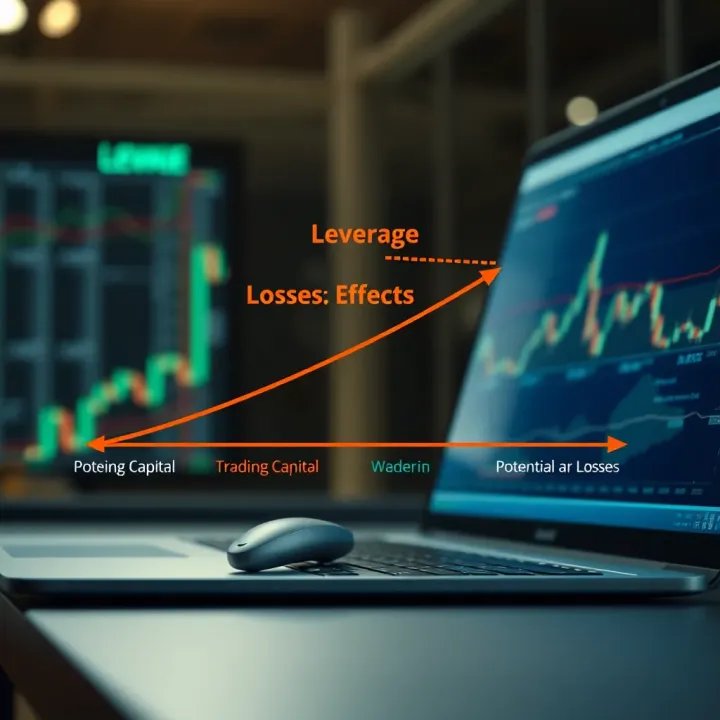
We’ll break down the nuts and bolts of leverage, take a close look at RCG Markets’ offerings compared to other brokers you might have heard of, and provide practical tips to help manage leverage like a pro, reducing risks without throttling your chances to grow your portfolio.
So, buckle up — it’s time to get a solid grip on leverage with RCG Markets, turning what often feels like a wild west element of trading into something you control with confidence.
Leverage is a big deal in forex trading because it lets you control a much bigger position with a relatively small amount of money. This means if you have a modest account balance, you can still participate in larger trades, potentially boosting your profits—though it’s a double-edged sword, as risks grow too. Understanding leverage is key for anyone trading with RCG Markets or any other broker, as it directly influences your trading power and risk exposure.
Put simply, leverage in forex trading is borrowing funds from your broker to increase your market exposure beyond your actual capital. Think of it like using a stepping stool to reach higher shelves—leverage raises your reach in the market. For example, if your leverage ratio is 1:100, it means for every $1 you have, you can control $100 in the market. So, with a $1000 deposit, you could open a position worth $100,000.
Leverage is usually expressed as a ratio, such as 1:10, 1:50, or 1:200. The higher the ratio, the more control you have over larger positions. However, it doesn’t mean you have free money—it’s just borrowed, and any loss will come out of your capital.
Here’s where things get interesting: leverage boosts your buying power. Imagine you spot a forex opportunity where the EUR/USD pair might move 100 pips. Without leverage, to make a decent return, you'd need a massive investment. But with leverage, your smaller deposit can capture these movements effectively.
If you have a leverage of 1:100 and you invest $1,000, you control $100,000 in the market. A 1% price movement in your favor could yield $1,000 profit—doubling your money—whereas without leverage, that same movement would only gain you $10. Naturally, if the market moves against you, those losses are magnified too.
Leverage acts like a magnifying glass, making both potential profits and losses bigger—it’s essential to handle it wisely, especially when trading volatile markets.
Knowing how leverage magnifies your position size helps traders at RCG Markets use it to their advantage but also understand the risks behind the scenes. It’s not about chasing big wins blindly, but about knowing your limits and strategizing accordingly.
Understanding the leverage options that RCG Markets provides is key to making informed decisions when trading. Leverage acts like a double-edged sword; RCG Markets allows traders to multiply their buying power but also requires a keen sense of risk management. Knowing exactly what kinds of leverage options are on the table can help traders tailor their strategies according to their risk appetite and capital.
For instance, consider a trader with $1,000 who wants to control a larger position in the forex market. Through RCG Markets’ leverage options, they can amplify this capital to trade volumes much larger than their initial deposit—thus unlocking opportunities that might otherwise be out of reach.
RCG Markets offers several account types, each with specific leverage limits designed to fit different trading styles and experience levels. The most common accounts are Standard, Pro, and VIP, with leverage varying accordingly:
Standard Account: Typically comes with leverage up to 1:100. This suits new traders taking cautious steps into the market.
Pro Account: Offers leverage up to 1:200, attracting traders who seek more exposure without going overboard.
VIP Account: Provides leverage up to 1:500 for highly experienced traders comfortable with taking larger positions.
For example, a Standard account holder with $500 can trade up to $50,000 worth of currency with 1:100 leverage. Meanwhile, a VIP account holder with the same deposit can control $250,000 under 1:500 leverage.
When choosing an account, it’s crucial to match your risk tolerance and trading strategy with the leverage available. Higher leverage means bigger potential profits, but it also amplifies losses. RCG Markets provides flexible account options, giving traders room to grow as they gain experience.
The highest leverage RCG Markets allows is up to 1:500 on certain account types and instruments. This is quite competitive in the forex brokerage market, especially for international traders. However, this high ratio isn’t always the best choice for every trader or every market condition.
Higher leverage means even the smallest price movements can have outsized effects on your profit or loss. Because of this, RCG Markets enforces margin requirements and uses risk control tools like stop-outs and margin calls to protect clients.
It’s worth remembering: maximum leverage is like the horsepower in a car. Just because you have a powerful engine doesn't mean you should always drive at full speed.
Traders using maximum leverage should be especially diligent with their money management. Employing stop-loss orders and sticking to a strict risk management plan keeps the odds from twisting too sharply against you.
To give a clearer picture, with 1:500 leverage, a trader depositing $200 can control a position worth $100,000. While the gain can be thrilling, a 0.2% adverse move wipes out the initial margin. That’s why knowing your own limits and the exact leverage offered per account type is fundamental in trading with RCG Markets.
By understanding these leverage options, traders can harness the right amount of buying power for their trading goals without getting caught in the potential pitfalls of too much risk. This balance lies at the heart of successful trading strategies with RCG Markets.
Leverage is a double-edged sword, and when used wisely with RCG Markets, it offers several practical benefits that can significantly enhance a trader’s portfolio. Understanding these benefits is essential for traders aiming to make the most out of their investments without exposing themselves to unnecessary risks. With RCG Markets, leverage doesn’t just mean borrowing capital; it means smartly expanding your trading potential.
One of the biggest advantages of leverage through RCG Markets is the ability to control larger market positions with less upfront capital. For example, if you have $1,000 in your account and use leverage of 1:100, you can open a position worth $100,000. This allows traders to step into larger market movements without needing an exorbitant amount of their own money.
This increased exposure means you don’t have to wait years to build substantial trading positions. However, it’s important to remember that while potential profits can be amplified, losses can be, too. A South African trader, for instance, might start with a modest deposit and use RCG Markets’ leverage to diversify into forex pairs like USD/ZAR or EUR/ZAR, gaining market entry that wouldn’t be possible otherwise.
Leverage also provides room to spread investments across multiple trades instead of putting all eggs in one basket. With small capital, RCG Markets’ leverage facilities let traders dabble in different instruments—say, local indices, currency pairs, or commodities—with smaller amounts allocated to each trade.
This diversification can reduce overall risk, as you’re not overexposed to a single market’s volatility. For example, a trader might allocate leverage to open positions in both the JSE Top 40 and major forex pairs. By balancing these positions, any adverse movement in one asset might be offset by gains in another, smoothing out potential losses.
Remember, leveraging small amounts to create multiple trading opportunities should be coupled with sound risk management practices to avoid overextending yourself.
With RCG Markets, traders gain not just more buying power but also strategic flexibility. That’s a critical edge when markets are unpredictable, especially in emerging regions like South Africa, where rapid currency swings can occur. By applying leverage thoughtfully, traders can expand their horizons without needing a clutch of capital sitting idle.
Trading with high leverage isn't something to jump into without understanding what’s at stake. Although leverage promises bigger buying power, it brings with it some serious risks that can quickly catch traders off guard—especially if you’re new or haven't set clear limits. For traders on RCG Markets, or any forex broker for that matter, knowing these risks helps you stay in the game longer and avoid nasty surprises.
Leverage works like a double-edged sword: it can multiply your profits, but it can just as easily multiply your losses. Imagine you open a position worth $10,000 using only $1000 of your own money with 10:1 leverage. If the market moves against you by just 5%, your position loses $500. Normally, a 5% move wouldn’t sting much, but with leverage, this loss equals half your starting capital. In real-world terms, this could wipe out a big chunk of your trading account much faster than expected.
Many traders underestimate how quickly small losses balloon into bigger ones under high leverage. It's like speeding in a car; you can get to your destination faster but one wrong turn could end badly. Without careful risk management, those losses don’t just eat profits—they can empty your account overnight.
When your account balance falls below a certain level because of losses, RCG Markets will issue a margin call, asking you to add funds to keep your trades open. Ignore it or fail to top up, and your positions might be automatically closed out to prevent further losses—this is called a stop out.
Think of a margin call as a chef telling you the pot is boiling over: it’s your warning sign. If you don’t act or misjudge the market, stop outs kick in, closing losing trades without your consent to protect both you and the broker. This mechanism ensures you can’t lose more than your deposited funds, but it means your trades will shut down even if the market could have reversed.
For example, say you leveraged a position aggressively, and the market plummets. Before you realize, a margin call is triggered. Without quick action, the broker steps in to close your position at a loss, sometimes worse than you planned. This forced exit can be frustrating, yet it’s a safeguard that highlights why managing leverage and monitoring accounts constantly is vital.
High leverage magnifies not only potential profits but also potential pitfalls, making it essential for traders to adopt cautious and calculated approaches when trading on platforms like RCG Markets.
By understanding these risks, South African traders can better appreciate why keeping leverage at a reasonable level and using stop losses are not just suggestions—they're survival tools.
Understanding the regulatory backdrop is essential when discussing RCG Markets leverage. Regulations dictate how much leverage a broker can offer, reflecting a blend of protecting the trader and maintaining a fair playing field. This section unwraps the layers of laws and guidelines that affect RCG Markets, showing why they matter not just to brokers but also to investors, financial analysts, and everyday traders in South Africa.
Leverage might look like a free ticket to big gains, but without proper rules, it can also turn into a lightning rod for serious losses. The regulators' role here is like a referee’s—they set limits, watch the game closely, and step in when players start bending the rules. For anyone investing through RCG Markets, knowing these rules is more than academic; it's about safeguarding your money from unnecessary risks.
The main regulators influencing leverage limits for RCG Markets include entities like the Financial Sector Conduct Authority (FSCA) in South Africa and other international bodies such as the UK's Financial Conduct Authority (FCA) or the Cyprus Securities and Exchange Commission (CySEC). These bodies impose leverage caps that RCG Markets must follow depending on where their clients are based.
For example, under FSCA guidelines, forex brokers typically cannot offer retail clients more than 1:200 leverage on major currency pairs. This means if you want to trade a position worth 200,000 ZAR, you’d need at least 1,000 ZAR in your account, instead of jumping in with nothing but hope. Such rules help to curb the temptation for traders to take on outsized bets that can wipe out their accounts rapidly.
Another practical element is that non-South African clients dealing through RCG Markets might experience different leverage options due to varied international rules. This must be transparent, ensuring you’re never caught off guard by a sudden change in margin requirements or limits.
Beyond just leverage limits, RCG Markets adheres to several compliance protocols designed to ensure client safety and maintain trust. This includes regular audits, segregating client funds from the company’s operational money, and enforcing strict Know Your Customer (KYC) procedures.
Segregation of funds is particularly crucial; it means your trading money is held separately from the broker's, so if the broker faces financial trouble, your funds remain protected. In addition, RCG Markets employs real-time monitoring systems to detect unusual trading activities or margin calls before they spiral out of control, offering traders a practical, real-world safety net.
From a compliance standpoint, consistent reporting to regulators like the FSCA guarantees that RCG Markets operates transparently. This transparency is comforting for traders—it shows the broker isn't cutting corners when it comes to risk management strategies.
Knowing the rules and compliance status of your broker isn't just about ticking boxes; it plays a direct role in how much risk you expose yourself to. With regulated leverage and solid safety measures, you’re in a better position to trade confidently.
Taken together, the regulatory context enveloping RCG Markets' leverage ensures a more disciplined approach to forex trading. It helps safeguard traders against reckless use of leverage, meaning those using RCG Markets can benefit from enhanced protection while navigating currency markets. This knowledge arms investors and traders alike with the clarity needed to manage their strategies wisely under the set rules.
Understanding how RCG Markets stands alongside other brokers in terms of leverage is key for any trader who wants to make informed decisions. Leverage isn't just a number; it's a tool that can either boost your returns or magnify your losses. When comparing brokers, it’s important to consider not just the maximum leverage offered, but also the context around how it’s provided, including account types, regulatory controls, and risk management features.
Consider a trader in South Africa looking to maximize their market exposure: they’ll want a broker that offers competitive leverage but also supports safe trading practices. Here, RCG Markets often comes into the picture for blendimg reasonable leverage scopes with compliance to regulatory standards prevalent in many regions, including South Africa.
Most brokers set leverage limits based on regulatory frameworks, which typically fall within common ranges: 1:30 to 1:500 for forex trading. In South Africa, many brokers align with leverage limits mandated by the Financial Sector Conduct Authority (FSCA), which can be lower for retail clients. For example, some brokers restrict leverage to 1:100 for retail accounts, while allowing higher limits on professional accounts.
RCG Markets generally offers a maximum leverage of up to 1:500 on certain account types, positioning it on the higher end of the spectrum. This is comparable to brokers like IC Markets and HotForex, which also provide similar leverage levels. However, not every client can access the upper leverage limits due to regulatory or account-specific restrictions.
It's important to note that while higher leverage can mean greater profit potential, it also significantly raises the risk profile of your trades.
When you pit RCG Markets against other brokers, a few practical advantages stand out:
Higher Leverage Options: For traders who understand and manage their risks, RCG Markets provides leverage levels that enable more aggressive trading strategies, particularly beneficial for seasoned traders with limited capital.
Flexible Account Types: Different account categories offer varying leverage, allowing traders to choose what fits their style best.
Regulatory Compliance: RCG Markets adheres to safety measures that protect client funds, an aspect sometimes overlooked in brokers offering extremely high leverage without proper controls.
On the flip side, the downsides are worth mentioning:
Risk of Overtrading: The availability of high leverage can tempt inexperienced traders to open larger positions than they can handle, which may lead to quick losses.
Margin Requirements: While leverage is attractive, the corresponding margin calls can put pressure on your trading account during volatile market moves.
Variability in Leverage Availability: Not all account types or regulatory jurisdictions allow the highest stated leverage, which can be confusing for traders onboarding without thorough research.
In contrast, other brokers like FXTM or Plus500 may offer lower maximum leverage (typically around 1:200) but compensate with more robust educational resources or demo accounts tailored for beginners.
Ultimately, the fit depends on your trading style and risk appetite. RCG Markets’ leverage offerings provide a potent edge but require discipline and a solid risk management approach to avoid common pitfalls.
Managing leverage is no small matter, especially when trading with platforms like RCG Markets where leverage options can be quite tempting. If you don’t keep a close eye on how much leverage you’re using, it’s pretty easy to end up with losses that dwarf your initial investment. This section walks you through how to keep your leverage in check, so you safeguard your funds without missing out on its benefits.
Choosing the right leverage level is the bedrock of solid trading strategy. It’s not about grabbing the highest leverage number just because it looks good on paper; it’s about matching the leverage to your trading style, experience, and risk appetite. For example, a new trader might decide to start with a modest 1:10 leverage, instead of jumping straight into 1:100, which can quickly wipe out an account with just a couple of bad trades.
Think of leverage like a double-edged sword: it boosts your potential gains, but also magnifies potential damages. Setting an appropriate leverage level means you stay comfortably within your risk zone, avoiding those nail-biting moments where a sudden market move can trigger margin calls. RCG Markets allows you to adjust leverage on different account types. Choosing wisely can help you control your exposure and trade with confidence.
Stop losses are your safety net when the market doesn't go your way. By setting a stop loss, you tell the trading platform to automatically close your position if the price hits a certain point, limiting your loss to a predefined amount. This is especially handy in leveraged trading, where price swings can chew through your balance fast.
Beyond stop losses, RCG Markets and similar brokers offer risk management tools such as take-profit orders, trailing stops, and margin alerts. Take-profit orders lock in gains by closing trades once your target price is hit, while trailing stops adjust automatically to follow a favorable price movement, giving your winning trades room to grow but tightening protection if the market reverses.
Effective use of these tools transforms leverage from a risky gamble to a calculated strategy. For instance, a trader using 1:50 leverage could risk only 2% of their account on a single trade with a carefully placed stop loss, which helps withstand market volatility without blowing the account.
In practice, combining appropriate leverage levels with diligent use of stop losses and other risk control features keeps your trading sustainable. It means you’re not relying on luck, but following a plan designed to protect your investment while allowing for consistent growth.
For traders in South Africa, understanding leverage through RCG Markets isn’t just a nice-to-know—it’s a must. The South African market has its own quirks, and local regulatory frameworks influence how leverage can be used safely and effectively. Traders here need to factor in these specifics to make the most of their trading strategies without getting blindsided by extra risks.
South Africa’s financial sector is overseen by the Financial Sector Conduct Authority (FSCA), which keeps a close eye on leverage offerings to protect local investors. Unlike some offshore brokers that might offer sky-high leverage, the FSCA enforces limits to prevent excessive exposure. For example, retail traders often find leverage capped at around 1:100 or less, compared to more lax rules elsewhere.
This means if you’re trading on RCG Markets from South Africa, you'll notice these caps influence your position sizes. The FSCA’s approach aims to curb potential blowups from sudden market swings that could wipe out accounts overnight. It’s a bit like having a safety net — not to hold you back but to keep your trading journey sustainable.
An everyday example would be a South African trader trying to open a forex position equivalent to 100,000 ZAR. With leverage limited to 1:100, the required margin would be at least 1,000 ZAR. This differs from brokers outside the FSCA umbrella who might promise 1:500 leverage, requiring far less margin but at the risk of much larger losses.
Playing it safe with leverage doesn’t mean staying on the sidelines. South African traders can still harness RCG Markets’ leverage tools effectively by following a few key strategies:
Start conservative: Don’t rush into maximum leverage right off the bat. Begin with moderate levels, like 1:10 or 1:20, to get a feel for how margin calls and market swings impact your balance.
Tailor leverage to your strategy: If you’re swing trading or focusing on longer-term moves, high leverage isn’t necessary. Use lower leverage to protect against sudden price shocks common in volatile markets.
Keep an eye on margin requirements: RCG Markets provides clear margin data. Keep tabs on this so you’re not caught unaware and forced into a stop-out.
Employ stop losses and take profits: Automatic order types are your best friends. They help prevent emotional decisions and shield your capital when things don’t go your way.
Stay updated on FSCA rules: Regulations can shift, and keeping track ensures you’re always trading within the legal limits.
Remember, the goal isn’t just to amplify profits but to ensure your trading account survives the ups and downs typical of forex markets.
In short, South African traders stand to benefit from RCG Markets’ flexible leverage options, but they must balance ambition with caution. By respecting local rules and adopting smart trading habits, leveraging can become a powerful tool rather than a double-edged sword.
Understanding the myths surrounding leverage on RCG Markets is just as important as knowing how leverage works. Many traders, especially beginners, tend to fall prey to common misconceptions, which can lead to poor decision-making and unexpected losses. By addressing these misunderstandings head-on, traders can better manage their expectations and use leverage more effectively. Let’s unpack some of these widespread myths.
One of the biggest mistakes traders make is thinking that leverage automatically means bigger profits. Leverage does magnify your trading power because it lets you control a larger position with less capital. But here’s the catch: it also amplifies losses just as quickly. Imagine using 1:100 leverage on a $100 trade; even a 1% move against you turns into a loss of your entire initial amount, or more.
Traders sometimes think leverage is a magic wand for easy money, but in reality, it's more like a double-edged sword. For example, if you trade EUR/USD with RCG Markets at 1:50 leverage and the market moves unfavourably by half a percent, your actual loss (considering the leveraged amount) could wipe out a significant chunk of your margin. So rather than guaranteeing profits, leverage heightens risk and demands careful management.
It’s often argued that leverage should only be handled by seasoned traders. While it’s true that experience helps in managing leverage wisely, it’s not an exclusive club. RCG Markets offers leverage options that new traders can tailor to their comfort level. For instance, beginners can start with lower leverage like 1:10 or 1:20 to keep risks in check.
What’s essential is education and disciplined risk management. Even a newbie can succeed with leverage if they take the time to learn market fundamentals, set stop losses, and avoid chasing unrealistic returns. On the flip side, experienced traders careless with leverage can burn through accounts just as fast. So, leverage isn’t reserved for pros only—it’s a tool, and like any tool, it’s about how you use it.
Remember: Leverage doesn’t make you a pro or a novice. It simply alters the trading dynamics. Being smart about it trumps experience alone.
In short, debunking these myths helps traders on RCG Markets approach leverage with a realistic mindset, reducing the chances of reckless decisions. The key is understanding leverage’s true impact on both potential gains and losses, regardless of your trading background.
Leverage can amplify your trading results, but it’s a double-edged sword. Knowing how to use RCG Markets leverage wisely means protecting your capital while still taking advantage of opportunities. The key is to treat leverage like a tool, not a shortcut to riches. Practical strategies help traders avoid pitfalls like blowing accounts or chasing unrealistic gains.
One common mistake is jumping in with high leverage right away. Imagine starting with a full sprint when you haven’t even stretched your legs. It’s better to begin with low leverage levels, perhaps 1:10 or 1:20, especially if you’re newer to RCG Markets or the forex game in general. This reduces the risk of huge losses while you get a feel for how margin and exposure work.
For example, if you have $1,000 in your account, opening trades with leverage of 1:10 means you’re effectively controlling $10,000 worth of currency. This is more manageable and lets you learn without risking your entire bankroll. As you gain confidence and sharpen your strategy, you can gradually increase leverage — but always keep a close eye on how it changes your risk profile.
Scaling gradually allows you to adapt to market swings and improve your skills without getting wiped out overnight.
Leverage won’t help if you don’t know what you’re doing. Successful traders stay curious and consistently educate themselves. This means not just reading about forex basics, but also diving into market news, economic indicators, and chart patterns that influence currency prices.
RCG Markets offers resources and webinars which can be invaluable for staying updated. Keeping an eye on events like central bank announcements or geopolitical tensions helps you anticipate volatility that might affect leveraged positions.
Regular market analysis combined with disciplined leverage use builds stronger trading habits. Instead of relying on luck or guesswork, you make informed decisions. For instance, if you spot a potential trend reversal on the EUR/ZAR pair but your leverage is high, it might be wise to reduce your position size or place a tighter stop-loss.
Ultimately, treating leverage as part of a broader strategy—not a magic bullet—will pay off in steadiness and long-term results.
Explore RCG Markets.com for South African traders 🇿🇦: in-depth on platforms, fees, asset variety, regulation, and support to make smart trading choices.
🔍 Explore the best deposit methods for RCG Markets in South Africa! Learn fees, processing times, currency options & security tips for smooth trades.

📈 Learn how to register with RCG Markets in South Africa. Step-by-step guide on account setup, verification, and managing your trading safely. ✅
🚀 South African traders, get the lowdown on RCG Markets' minimum withdrawal rules, fees, payment methods, and tips for hassle-free fund access. 💸
Based on 14 reviews