

Understanding Ethereum: Technology and Impact
Explore how Ethereum powers decentralised apps and smart contracts with practical examples from finance to tech trends in South Africa 🌍💻📈
Edited By
Amelia Turner
Derivatives play a fundamental role in various fields, especially in finance, where traders and investors rely on them to price assets and manage risk. At its core, a derivative measures how a function changes as its input changes — essentially, it's about understanding the rate of change.
In a mathematical sense, the derivative of a function at a point gives you the slope of the line tangent to its graph. This slope tells you how quickly values are rising or falling at that exact moment. For example, if the price of a commodity suddenly rises quickly over a short period, its derivative at that point will have a high positive value.
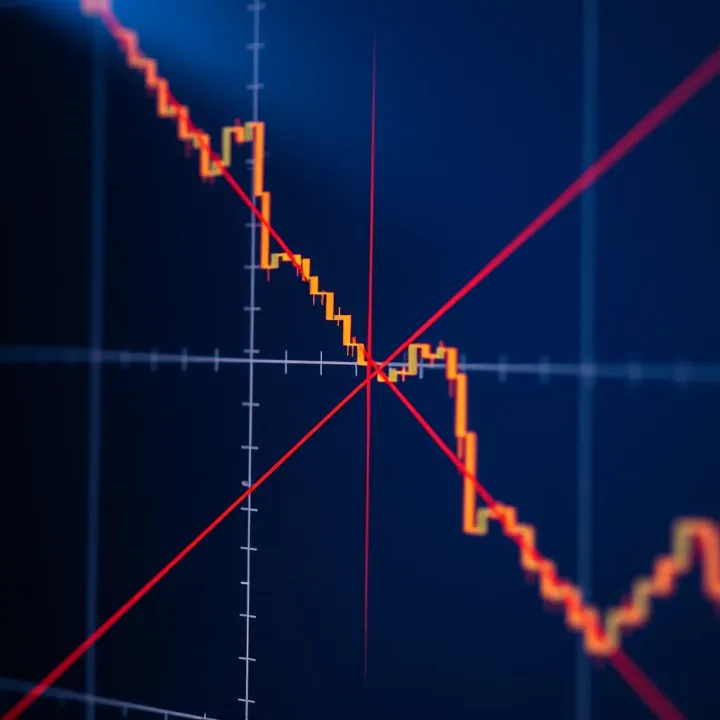
This concept isn't just theoretical. Traders use derivatives to anticipate how prices might move next. The most basic approach involves limits, where you look at the difference in function values over extremely small changes in input. While the formal definition might feel abstract, applying it to real-world data, such as a stock's price over minutes or hours, gives actionable insights.
Power rule: If a variable is raised to a power, you multiply by the power and reduce the power by one.
Product rule: Finds the derivative of the product of two functions.
Quotient rule: Helps when dealing with the ratio of two functions.
Chain rule: Deals with composition of functions, useful for nested calculations.
These rules are essential for breaking down complex pricing models or interest rate formulas.
To make this concrete, say an asset's price follows the function (P(t) = 5t^2 + 3t + 10), where (t) is time in days. The derivative (P'(t)) = (10t + 3) represents how fast the price changes daily. At (t=2), (P'(2) = 23), meaning the price is increasing at R23 per day on the second day.
Understanding derivatives isn’t just academic; it opens up new ways to predict and react to market movements effectively.
Graphically, the slope of a function's curve at any point reveals if an asset price or economic indicator is accelerating, decelerating, or stable. Once familiar, this insight helps in spotting trends and potential reversals early.
In finance, derivatives also refer to contracts whose value depends on underlying assets — like futures and options. Although related by concept, this article lays the groundwork on the mathematics behind these financial instruments.
Getting to grips with derivatives enables smarter decision-making for analysts and consultants who need to forecast market swings or optimise portfolios. Knowing how to calculate and interpret these changes helps you stay ahead in South Africa’s dynamic markets.
Understanding the fundamentals of derivatives provides the bedrock for grasping how change operates in various contexts, especially in finance and investment. These basics demystify how small shifts in one variable affect another, which is key for traders and analysts keen on predicting market moves or optimising portfolios.
A derivative measures the slope of a curve at any given point. Imagine the graph of a share price over time; the slope at a specific instant tells you if the price is rising or falling, and how sharply. This is crucial when deciding the momentum behind a stock’s movement. For example, a steep positive slope may indicate rapid growth, hinting at an opportunity to buy.
Beyond slope, a derivative conveys the rate of change of one variable compared to another. For instance, if a company’s revenue grows steadily but costs increase faster, the derivative of the profit function can reveal this imbalance early. This sort of insight helps investors catch potential warning signs before earnings reports.
Think of the derivative as the instantaneous velocity of a moving object—like a car’s speedometer reading at a random second rather than an average speed over minutes. Similarly, the derivative shows exactly how fast and in what direction a financial figure is moving right now, rather than over a longer period. Such precision aids traders in making split-second decisions.
The idea of limits underpins the very definition of a derivative: what happens as the change in the input becomes vanishingly small. In practical terms, it’s like zooming in on a share price graph so closely you see how its direction changes at an exact point, enabling precise calculation of risk or expected gain.
The difference quotient is a method for estimating the slope of a secant line connecting two points on a curve. This forms the stepping stone towards finding the exact derivative. Imagine measuring how much a commodity's price changes between two days—the difference quotient gives a rough idea of price movement, a tool often used in early market analysis.
By shrinking the interval between data points, the difference quotient approaches the instantaneous rate of change—or the true derivative. This concept is valuable in scenarios like algorithmic trading, where understanding the immediate trend rather than an average over time can mean the difference between profit and loss.
Grasping these fundamentals arms you with clarity when analysing complex financial patterns, ensuring that every decision is backed by a precise understanding of how variables shift in real time.
In all, these core ideas prepare you to see derivatives not just as abstract calculus, but as practical tools with direct application in modern trading and investment strategies.
Understanding the basic rules of differentiation is vital when analysing rates of change in any context, including financial markets, economics, or physical phenomena. These rules provide a toolkit to handle a range of functions efficiently without resorting to limits every time. By mastering them, traders, analysts, and consultants can quickly determine slopes, forecast trends, and optimise strategies.

The constant rule states that the derivative of a constant is zero. This makes sense because a constant value, say a fixed interest rate without change, offers no rate of change over time. This rule simplifies calculations by instantly recognising that any fixed number drops out when differentiating.
The power rule allows you to find the derivative of any function where the variable is raised to a power. Specifically, if you have x raised to the power of n, its derivative is n times x to the power of n minus one. For example, the derivative of x³ is 3x². This rule is especially useful in modelling scenarios like compound growth or cost functions where powers frequently appear.
When a function is multiplied by a constant, the derivative can be found by multiplying that same constant by the derivative of the function. For example, if you have 5x², its derivative is 5 times the derivative of x², which is 5 × 2x = 10x. This rule helps simplify expressions quickly, especially when constants represent fixed factors like tax rates or coefficients in economic formulas.
These rules tell us that the derivative of a sum or difference of functions is just the sum or difference of their derivatives. For instance, if you have f(x) = x² + 3x, its derivative is the derivative of x² plus the derivative of 3x, which is 2x + 3. This rule allows complex functions made from simpler parts to be broken down easily.
When two functions multiply, their derivative isn’t the product of their derivatives. Instead, the product rule applies: the derivative of the first times the second, plus the first times the derivative of the second. Say you're investigating profit, which is price multiplied by quantity — both changing with time. This rule lets you capture that combined change accurately.
For quotients, like dividend yield (dividend over price), the quotient rule comes into play. It states the derivative is the denominator times the derivative of the numerator minus the numerator times the derivative of the denominator, all divided by the denominator squared. This ensures precise calculation of rate changes when one variable is divided by another.
Consider differentiating h(x) = (x²)(e^x). Using the product rule, derivative is (2x)(e^x) + (x²)(e^x). Or for a quotient like g(x) = (sin x) / x, apply the quotient rule carefully to avoid mistakes. These examples highlight the direct application of the rules in practical functions frequently encountered in analytics.
Composite functions, where one function feeds into another, appear often — for example, a pricing model where demand depends on income, which itself changes with market confidence. The chain rule helps differentiate these layered functions correctly by accounting for inside and outside functions separately.
The chain rule process involves differentiating the outer function first, keeping the inner function unchanged, then multiplying by the derivative of the inner function. Breaking it down stepwise reduces errors, especially with more complicated nested functions.
If you differentiate f(x) = (3x + 2)^5, the chain rule says to bring down the 5 and multiply by the function raised to the fourth power, then multiply by the derivative of the inside (3x + 2), which is 3. So, the derivative is 5(3x + 2)^4 × 3 = 15(3x + 2)^4. Such applications are crucial in financial modelling, like calculating sensitivity measures (‘Greeks’) in options pricing.
Mastering these differentiation rules lets you break complex functions into manageable pieces. This skill translates into sharper analyses, more accurate trend predictions, and better decision-making in financial and business contexts.
Understanding the derivatives of common functions is essential for traders, investors, and financial analysts who rely on mathematical tools to model market behaviour and make informed decisions. These foundational derivatives form the backbone of more complex models and highlight how different types of functions change, which can be directly applied to financial instruments like options, interest rates, or trend analysis.
Polynomials, such as f(x) = 3x³ - 5x + 2, are among the easiest functions to differentiate. Their derivatives tell you how the slope changes at any given point, which is useful when modelling cost functions or profit trends. The power rule applies here — for each term axⁿ, the derivative is n·axⁿ⁻¹. For example, the derivative of 3x³ is 9x². This simplicity makes polynomials valuable for quick estimations in economic forecasting or risk management.
Exponential functions, notably those of the form f(x) = aˣ or in finance e^rt (where e is Euler’s number), are crucial for modelling growth processes like compound interest or population growth. Their derivative reflects the rate at which growth accelerates. The derivative of e^x is e^x itself, which means the rate of change at any point equals the function’s current value — a neat property for continuous compounding.
Logarithmic functions, like f(x) = log_a(x), serve well in transforming exponential data into linear forms, making them easier to analyse. Their derivative, 1/(x ln a), plays a role in elasticity calculations or determining percentage changes relative to absolute changes, common in financial sensitivity analysis.
While more frequent in engineering, trigonometric derivatives also surface in finance when modelling cyclical behaviours or seasonal trends. Functions like f(x) = sin x or cos x have derivatives that cycle between sin and cos, reflecting periodic ups and downs. For instance, the derivative of sin x is cos x; this relationship can help predict turning points or oscillations in market indices or commodity prices.
Recognising these function derivatives equips you to identify how different financial quantities evolve over time, aiding in better forecasting and strategy development.
Each type of function has its own distinct derivative pattern, making it easier to choose the right tool depending on the problem at hand. Understanding these patterns avoids missteps in interpreting rate of change and improves clarity when building financial models.
Understanding derivatives goes beyond formulas and calculations; it’s about grasping their real-world meaning and how they influence decisions. For traders, investors, financial analysts, brokers, and consultants, interpreting derivatives can reveal subtle shifts in market trends, pinpoint optimal entry or exit points, and aid in risk management.
A derivative at a particular point gives the slope of the tangent line to a curve at that location. In simpler terms, it tells you how steep the curve is right there. For example, when analysing a stock price graph, the derivative indicates how fast the price is rising or falling. A steep positive slope suggests rapid gains, while a steep negative slope signals sharp losses. Seeing this visually helps traders act more confidently when timing their moves.
When the derivative is positive over an interval, the function is increasing – think of a share price steadily climbing over days. Conversely, a negative derivative means the function is decreasing, like a downward trend after poor earnings. Identifying these trends quickly can guide investment decisions, such as when to buy or sell. This understanding is vital because not every price rise or fall is significant; the derivative filters out noise to show sustained momentum.
Points of inflection occur where the curve changes its concavity from curving up to curving down or vice versa. At these points, the second derivative (rate of change of the derivative) crosses zero. For financial analysts, spotting inflection points can indicate trend reversals or shifts in market sentiment. For example, a sudden change in acceleration of a currency's exchange rate might signal upcoming volatility. Recognising inflection points helps in anticipating turning points rather than reacting late.
In physics, derivatives explain speed and acceleration as rates of change of position and velocity with respect to time. This analogy translates neatly into finance where speed could represent how quickly an asset’s price changes, and acceleration depicts the acceleration or deceleration of that change. Traders use such concepts to gauge momentum – similar to how a bakkie slowing down before a robot shows the driver’s anticipation.
Derivatives are central to optimisation problems, like maximising profits or minimising costs. Suppose a company wants to find the price point that yields the highest revenue; derivative analysis of the revenue function aids in this. Consultants apply this to advise firms on production levels, pricing strategies, or resource allocation, ensuring efficient operation amid fluctuating markets.
Derivatives measure how quickly quantities evolve, whether it’s population growth or financial indicators like interest rates or inflation. For instance, a financial analyst tracking inflation's derivative can spot accelerating increases that might prompt changes in investment strategy. Similarly, understanding population growth rates informs infrastructure development or market potential assessments. Paying attention to these rates helps anticipate future challenges or opportunities before they become apparent.
The ability to interpret derivatives graphically and apply them practically equips market players to make timely, informed decisions rather than purely reactive ones. In volatile economies like South Africa’s, such insight is especially valuable to mitigate risks and exploit emerging trends.
Understanding the common pitfalls in differentiation helps you avoid errors that can lead to incorrect analyses or decisions—particularly for traders, investors, and financial analysts who rely on precise calculations. By recognising tricky areas and common mistakes, you save time and improve your mathematical accuracy, ultimately supporting better market strategies and forecasts.
Implicit differentiation comes into play when functions are not given in the straightforward "y=f(x)" format but instead link x and y together in an equation. For instance, the curve defined by x² + y² = 1 doesn’t express y explicitly, but you can still find its derivative by differentiating both sides with respect to x while treating y as a dependent variable. This method is vital in finance when dealing with implicit relationships, like option pricing models where variables intertwine.
When it comes to higher-order derivatives, these involve taking derivatives of derivatives, revealing insights into the curvature or acceleration of a function. The second derivative often helps analysts gauge the concavity of profit functions or the acceleration of market trends. For example, if the first derivative of a stock’s price indicates speed of change, the second derivative shows how quickly the trend accelerates or slows down, aiding more nuanced investment decisions.
Derivatives with parametric equations are useful when functions are defined by parameters rather than a single variable, such as x(t) and y(t). This technique helps describe more complex paths, like asset price movements influenced by multiple factors over time. Calculating dy/dx in parametric form involves dividing dy/dt by dx/dt, a handy skill when dissecting movements that don’t fit neatly into one variable context.
Misapplying differentiation rules is a common stumbling block, especially under time pressure. For example, confusing when to use the product rule versus the chain rule can lead to wrong derivatives. Take the function h(x) = x² sin(x); applying the sum rule by mistake won’t cut it. Understanding each rule’s purpose and practising their application keeps your calculations accurate, crucial for financial models relying on exact rate changes.
Forgetting the chain rule steps often causes errors in differentiating composite functions. When a trader encounters nested functions like the exponential of a cosine function, skipping intermediate steps leads to wrong derivatives and misreads of sensitivity analyses. Breaking down the process into smaller parts and writing each derivative step ensures nothing slips through the cracks.
Lastly, sign errors—mixing up plus and minus signs or neglecting them—can flip conclusions entirely. One misplaced minus in a rate of change could signal a rising stock as falling, which has real-world consequences. Slow and deliberate checks during differentiation, especially in complex formulas, help catch these costly mistakes early.
Careful attention to these challenges improves the precision of derivative calculations, a critical edge in the financial sector where small errors can lead to big losses. Consistent practice and methodical problem-solving make mastering them more manageable.
Explore how Ethereum powers decentralised apps and smart contracts with practical examples from finance to tech trends in South Africa 🌍💻📈

🔍 Explore synthetics: types, uses in industries, and their environmental & health impact. Get clear insights on synthetic materials in daily life.

Discover Qutex 📊: its definition, how it works, key benefits, real-world applications, and challenges, tailored for the South African context.

Discover how app derivatives build on existing apps, their practical uses, legal and ethical insights, plus tips on development suited to South Africa’s digital scene 📱🇿🇦
Based on 8 reviews