
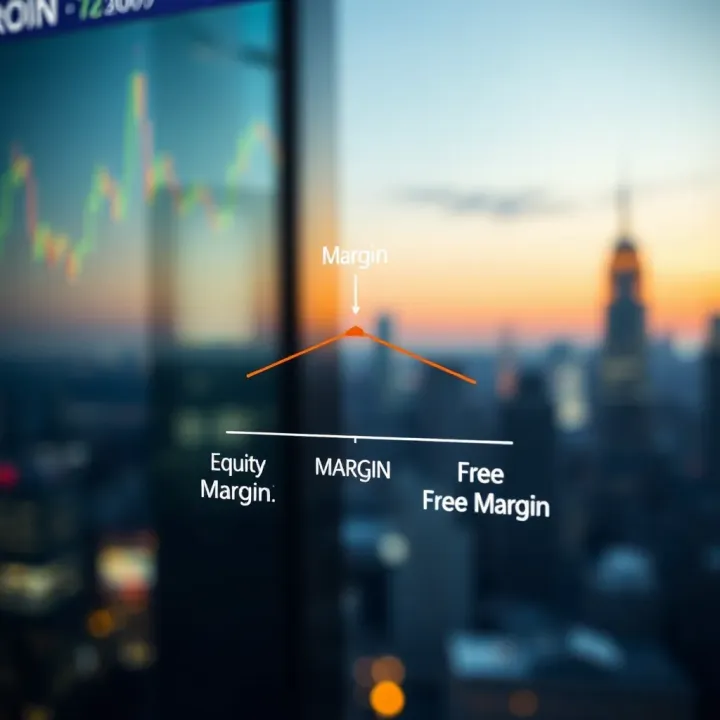
Understanding Free Margin in Forex Trading
🔍 Understand free margin in forex trading: learn how it affects your trades, risk, and equity to manage your Forex account confidently in South Africa’s market.
Edited By
Charlotte Hill
In forex trading, a margin call isn't just a dry technical term — it's a warning sign that your trading account is under pressure. Simply put, a margin call happens when your account equity falls below the minimum margin required by your broker. This puts you at risk of losing your open positions if you don’t act fast.
To trade forex, you usually borrow money from your broker to open bigger positions than your actual capital allows — this is called trading on margin. But if the market moves against your position, your losses eat into the margin.
For example, say you have R10,000 and use 10:1 leverage to control a R100,000 position. If the exchange rate shifts unfavourably so that your losses approach the margin amount required to keep the position open, your broker will issue a margin call. This means you need to either put more money into your account or close some deals to reduce risk.
A margin call is essentially your broker’s way of asking, "Do you have enough funds to cover your losses?" If you don’t respond with more collateral, your positions could be liquidated without further notice.
Leverage is a double-edged sword. While it can magnify profits, it can also accelerate losses. Over-leveraging means risking more than you can realistically cover, which is common among inexperienced traders trying to chase big returns fast. This is particularly risky in South Africa where the rand’s volatility can catch traders unawares, especially during economic uncertainties or global shocks.
South African traders should:
Maintain a healthy cushion: Keep funds above the minimum required margin to absorb typical market swings.
Regularly monitor your trades: Use platforms that send alerts when margin approaches critical levels.
Limit leverage ratios: Starting with lower leverage (e.g. 5:1 or less) is safer.
Diversify currency pairs: Avoid concentrating risk on one volatile pair.
Set stop-loss orders: This automates closing a position before losses spiral.
Forex brokers in South Africa are regulated by the Financial Sector Conduct Authority (FSCA), which requires transparent margin and leverage rules. Check your broker’s terms carefully, especially hidden fees or policies on forced liquidation.
Understanding margin calls is key to trading smart and staying afloat in volatile Forex markets. With clear strategies and disciplined risk management, traders can avoid nasty surprises and protect their capital.
An FX margin call is a warning traders receive when their trading account’s available margin falls below the broker’s required minimum. This alert signals that the trader’s positions are at risk because they’ve used too much of their margin or losses have eaten into their account balance. Understanding what triggers a margin call and how brokers respond is vital for managing risk effectively in forex trading.
Margin trading in forex means you borrow funds from your broker to open larger positions than your actual capital would allow. Leverage is the ratio that shows how much larger your position can be compared to your own investment — for example, a leverage of 1:100 lets you control R100,000 with just R1,000 of your own money. However, this comes with margin requirements, which is the amount of your account equity needed as collateral to maintain those positions.
By using margin, traders can amplify both gains and losses. Say you want to trade the USD/ZAR pair worth R50,000; if your broker requires a 1% margin, you'd need R500 in your account to open and maintain that position. This allows smaller traders to participate actively without needing the full amount upfront. Still, it’s a double-edged sword, as the market can move against you rapidly, potentially leading to margin calls if your account equity dips too low.
Margin calls typically happen when your account’s equity falls below the broker’s maintenance margin, which is the minimum margin needed to keep your positions open. For instance, if the market swings unfavourably and you suffer losses that reduce your equity close to or below this level, the broker will alert you. Sudden volatility in currency pairs like GBP/ZAR can eat into your margin swiftly, especially if leveraged.
Once the margin call threshold is reached, brokers often notify traders via email, SMS, or platform alerts. If you don’t add funds or close positions to free margin, brokers may begin closing your open trades automatically to limit further losses. This protective measure helps the broker avoid negative balances, but it can leave traders with less control and possibly realised losses.
Knowing how margin calls happen and how brokers react enables you to manage your trading account wisely and avoid unexpected shutdowns of your positions.
Managing your margin levels actively, understanding leverage, and responding swiftly to margin call alerts can make a real difference in preserving your trading capital.
Margin calls happen primarily because the value of your open positions drops to a point where your available margin can no longer support them. This often comes down to two main factors: sudden swings in currency prices due to market volatility and the risks involved with using too much leverage. Understanding these causes helps you manage your risks better and avoid the unpleasant surprise of a margin call wiping out your trading capital.
Currency markets can be quite unpredictable—even small moves can have a big impact when you’re trading with leverage. Sudden currency swings usually happen in response to unexpected economic news, geopolitical tensions, or shifts in sentiment. For example, when the US Federal Reserve changes its interest rate outlook, the US dollar often reacts sharply. If you’re long on EUR/USD and the dollar suddenly gains strength, your margin might quickly erode, triggering a margin call.
Sometimes, volatility isn’t just about big global events. Localised issues like South Africa’s loadshedding schedule or political developments can cause the rand to move unpredictably against other currencies. Such swings can tighten your margin buffer far faster than anticipated, especially if you hold larger positions.
A practical example would be Brexit announcements or election results that cause GBP to fluctuate violently. Traders who held leveraged GBP positions might have faced margin calls due to sharp price drops or surges lasting only hours. Similarly, abrupt moves in emerging market currencies during periods of global risk aversion can drain margin quickly.
Even unexpected comments from central bank officials or sudden policy reversals can cause moments of high volatility. Because forex runs almost 24/5 globally, these events can happen while South African traders are less active, catching them off guard when checking their accounts later.
Using high leverage amplifies both potential gains and losses, but it also increases your vulnerability to margin calls. If you apply, say, 100:1 leverage, a 1% adverse move in the currency pair wipes out your entire margin. Traders who over-leverage effectively put themselves on a tightrope—not much room for error.
Many beginners fall into the trap of thinking higher leverage equals more profits. However, the downside is that your margin is consumed far quicker when the market moves against you. This can force premature closing of positions and crystallise losses you might have otherwise managed.
Successful forex trading requires knowing your limits and setting appropriate leverage based on your capital and risk appetite. For instance, using 10:1 leverage allows a bit more breathing room than 100:1, so a moderate price drift won’t immediately trigger margins calls.
Moreover, balancing risk involves combining leverage choices with effective risk management tools like stop-loss orders and reasonable position sizing. This way, your exposure stays manageable and your trading capital protected against sudden swings.
Margin calls are often a symptom of taking on more risk than your account can handle, particularly when volatile conditions come into play. Keeping an eye on these factors helps you avoid nasty surprises and trade more sustainably.
Margin calls can have a significant impact on traders, affecting both their active positions and overall account health. Understanding these effects helps traders prepare better and avoid unnecessary financial strain.
When a trader's account margin falls below the required level, brokers step in to limit their own risk. This usually means closing out some or all of the trader’s open positions without needing prior consent. Brokers do this to prevent losses from spiralling and protect their capital, especially in volatile markets.
For example, if a South African trader holds several high-leverage positions during a sudden, sharp rand-dollar move, the broker may automatically close these trades to stop the account balance going negative. This automatic closure can happen very quickly, sometimes before the trader can react.
This action directly impacts the trader’s account equity because closed positions realise any existing losses immediately. Instead of floating losses that might recover, forced closures lock in these losses, reducing available funds and possibly stopping other planned trades.
While margin trading allows you to control large positions with smaller capital, it also carries the serious risk of losing more than you initially put in. Negative balance situations arise when the market moves against your position so fast that the broker’s risk control measures can’t close out trades in time, pushing the account below zero.
In South Africa, regulatory changes have pushed many brokers to offer negative balance protection. But it’s still crucial to understand that without proper safeguards, there’s always a risk of owing money beyond your invested margin, especially in fast-moving currency pairs or during unexpected events.
To guard against margin calls and negative balances, traders must use risk management tools like stop-loss orders or limit orders. Setting stop-loss points limits potential drawdowns and lets you control losses if the market shifts against your trade.
Also, regularly monitoring your margin levels and keeping extra funds aside can provide a buffer during turbulent swings. South African brokers typically provide account management features allowing you to set margin alerts and manage positions actively — making these tools essential for responsible trading.
By understanding how forced closures work and using risk management strategies, you can protect your capital and trade forex more confidently, even during choppy market conditions.
Avoiding margin calls is vital for forex traders who want to protect their capital and sustain long-term trading success. A margin call can force a trader to close positions at unfavourable prices or even lose more than their initial investment. The key to preventing this is understanding how to monitor and manage your margin utilisation, implement effective stop-loss strategies, and choose leverage wisely according to your trading plan and financial capacity.
Traders should make it a habit to keep a close eye on their margin levels. Most platforms offered by South African brokers provide real-time margin utilisation tools that display exactly how much margin is being used and how much remains available. For example, if you notice your utilised margin edging close to 80%, it's a clear sign to reduce exposure or add funds before a margin call triggers.
Setting personalised alerts with your broker is another practical way to stay informed. These alerts can notify you via SMS or email when your margin usage hits certain thresholds. This early warning system lets you act quickly to avoid forced liquidations. Many local brokers like Standard Bank Online Forex or IG offer such account notifications, which can save you from costly surprises during volatile market conditions.
Stop-loss orders are essential tools to limit potential losses on any trade. By placing a stop-loss at a pre-determined price level, you automatically exit a losing trade before it eats too deeply into your margin. For instance, if you're going long on USD/ZAR at R18.00 and set a stop-loss at R17.80, your trade will close automatically if the price falls, protecting your capital.
Adjusting your stops as trades move favourably helps lock in profits and reduce risk. Suppose your position gains some ground; you can move the stop-loss closer to the current price, ensuring you don’t give back all your gains in sudden reversals. This dynamic risk management prevents margin calls by controlling downside exposure while letting winners run.
Using lower leverage is one of the simplest ways to manage risk. High leverage can magnify profits but also losses, increasing the chance of a margin call. For example, trading with 1:10 leverage is safer than 1:100 because your margin buffer is larger relative to the position size. Many South African brokers offer leverage caps precisely to encourage responsible trading.
Matching your leverage choice to your trading style and available capital is critical. If you prefer scalp trades or short-term positions, lean towards conservative leverage to avoid rapid margin erosion. Conversely, if you’re an experienced trader with a larger bankroll, you might afford to take slightly higher leverage—provided your risk controls are tight. In all cases, don’t let leverage push you beyond comfort or financial limits.
Staying proactive with margin management protects you against volatile moves and unexpected losses, making forex trading more sustainable and less stressful in South Africa’s often choppy forex environment.
By regularly tracking margin usage, applying stop-loss orders smartly, and picking leverage that suits your strategy, you can steer clear of margin calls and better shield your trading account. This disciplined approach forms the backbone of responsible forex trading and helps keep you in the market for the long haul.
Managing your forex trading account well is key to surviving the ups and downs of the currency market. Practical steps like keeping margin buffers, diversifying trades, and using broker-specific tools can help you avoid nasty shocks like margin calls or forced liquidations.
Setting aside extra funds above the minimum margin requirement gives your account a cushion against sudden market swings. For example, if your broker requires a margin of R5,000 for a trade, having at least R7,000 on hand offers breathing room if the market moves against you. This margin buffer reduces the chance of getting a margin call — typically triggered when your margin level falls below the broker’s maintenance margin.
Planning for drawdowns means expecting losses from time to time and ensuring your account can handle them without shutting down your trades. Drawdowns can be sharp, especially in volatile pairs like USD/ZAR during political announcements. Budgeting extra capital specifically for such downturns helps maintain confidence and limits panic decisions.
Spreading risk over different currency pairs helps smooth out the profit and loss swings. Instead of focusing solely on EUR/USD, including a mix such as GBP/USD and USD/ZAR can lower your overall exposure. Different pairs react differently to global events, so diversification hedges against sudden shocks that might affect one currency pair heavily.
Avoid putting too much weight on any single position. Even if a trade looks promising, risking a large portion of your capital on it is risky. For instance, putting half your account into one USD/ZAR trade could wipe you out if the rand weakens unexpectedly due to changes in commodity prices or Eskom challenges. Smaller, spread-out positions limit the damage.
Local brokers offer leverage limits designed to protect traders from excessive risks common in volatile emerging markets. For example, brokers often cap leverage at 1:100 or lower for rand-based pairs, reducing the chances of large margin calls. Knowing your broker’s margin call and stop-out policies helps you trade within safe boundaries.
Access to account management tools, such as real-time margin tracking, mobile notifications, and quick deposit facilities, lets you respond quickly to margin changes. South African brokers like IG, EasyEquities, or Plus500 provide these features, helping you maintain control and avoid forced position closures caused by unexpected margin shortfalls.
Maintaining discipline with extra margin buffers, smart diversification, and using your broker’s tools wisely goes a long way to protecting your trading capital in the unpredictable forex market.
🔍 Understand free margin in forex trading: learn how it affects your trades, risk, and equity to manage your Forex account confidently in South Africa’s market.
📈 Get to grips with indices in forex trading: how they affect currency pairs and strategies tailored for South African traders in shifting global markets.
🤖 Understand how forex trading bots operate, their pros and cons, plus tips for picking the right one while staying compliant with South African trading rules.
📊 Learn how pips calculators simplify forex trading by helping you calculate trade values and manage risk effectively. Master your trades today!
Based on 15 reviews