
Understanding Free Margin in Forex Trading
🔍 Understand free margin in forex trading: learn how it affects your trades, risk, and equity to manage your Forex account confidently in South Africa’s market.
Edited By
Benjamin Wright
Margin in forex trading is often misunderstood, yet it’s a fundamental concept every trader needs to grasp. Simply put, margin is the amount of money a trader needs to put down as collateral to open a position. Think of it as a deposit or good-faith guarantee that allows you to control a larger trade size than your actual cash balance.
Unlike buying shares outright, forex trading involves using leverage, which means you only need a fraction of the trade value upfront. For example, a margin requirement of 1% allows you to control R100,000 worth of currency with just R1,000 in your account. This can boost profits but also magnifies losses quickly if the market moves against you.
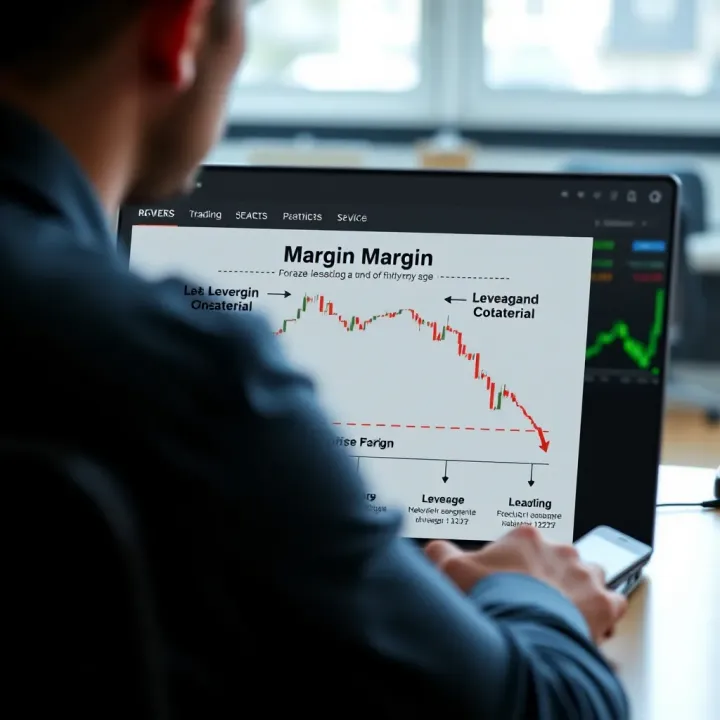
Margin is not a fee or a cost; it’s your security deposit to cover potential losses.
South African brokers often offer different margin requirements depending on the currency pair and the level of leverage you opt for. For instance, major pairs like EUR/USD usually require lower margin than exotic pairs like USD/ZAR, which might need more due to higher volatility.
Understanding margin calls is critical. If your equity (account balance plus or minus open position profit/loss) falls below the required margin level, the broker might ask for more funds or start closing positions to limit further losses. This can be a rude shock for unprepared traders.
To manage margin effectively, keep these points in mind:
Regularly monitor your margin level and equity.
Avoid using maximum leverage if you’re new or risk-averse.
Use stop-loss orders to cap potential losses.
Consider volatile market conditions — like when local or international news impacts the rand — which can drain margin quickly.
By having a clear understanding of how margin works and applying cautious risk management, you can trade forex with more confidence and reduce the chance of unexpected account blowouts. It’s about balancing opportunity with prudence, not just chasing high leverage.
Understanding margin is essential for anyone looking to trade forex responsibly and profitably. Margin in forex trading is the amount of money you need to put down as collateral to open a position. This is not a fee or a cost but rather a portion of your funds that your broker holds to cover potential losses. Without margin, trading large positions wouldn't be possible for most traders as it enables greater exposure to currency markets than the actual capital available.
Margin represents a trader's stake or security deposit in the trade. For example, if you want to buy R100,000 worth of a currency pair, and your broker requires a margin of 1%, you’d only need to set aside R1,000 from your trading account. This R1,000 acts as a kind of good-faith deposit to cover your potential losses. Importantly, margin varies depending on the broker and the currency pair, often influenced by the volatility and liquidity of that pair.
To put it simply, think of margin as a booking fee at a hotel. You don’t pay the whole cost upfront; instead, you pay a deposit that shows your commitment to honour the booking. If the hotel room price shoots up or down dramatically, the deposit protects the hotel against your no-show or cancellation. Similarly, the margin ensures the broker can cover losses should the market move against you.
Margin allows traders to control larger positions with relatively small capital by using leverage. Leverage is the ratio between the full value of your trade and the margin required. For instance, a leverage of 100:1 means you can control R100,000 with just R1,000 of your own money.
Leveraged trading amplifies both gains and losses. For example, with R5,000 on margin at 50:1 leverage, you effectively control a position of R250,000. If the market moves in your favour by 1%, your actual profit is R2,500, which is a 50% return on your R5,000. But if the market goes the other way by 1%, you face a R2,500 loss—half your initial stake gone. This underscores why managing margin actively is vital.
Keep in mind: Higher leverage isn't always better. It’s like handling a sharp knife; it can be handy but dangerous if you aren’t careful.
In practical terms for South African traders, margin and leverage let you enter sizeable trades even when capital is limited, but it calls for strict risk controls like stop losses and sensible leverage levels. Always check your broker’s margin requirements and leverage options. Brokers registered with the Financial Sector Conduct Authority (FSCA) usually have stricter margin rules to protect traders from excessive risk.
By grasping what margin means and how it works, you’re better equipped to navigate forex trading with awareness, setting the foundation for skillful risk management as you grow your trading journey.
Margin requirements serve as the backbone of responsible forex trading, ensuring both traders and brokers maintain a safety net. Essentially, these requirements dictate how much capital you need to hold in your trading account to open and maintain a position. This system limits overexposure and helps manage risk, especially when using leverage.
A margin call happens when your account's equity falls below the broker's set threshold. Imagine you start with R10,000 as margin to control a position worth R100,000 on the forex market with 10:1 leverage. If the market moves against you and your losses grow, your equity could dip below the required margin. At this point, your broker will issue a margin call, requesting you to deposit more funds or close out losing positions.
Margin calls typically arise due to:
Sudden market swings caused by economic data releases or geopolitical events
High leverage increasing exposure beyond your buffer
Insufficient risk management, like neglecting stop losses
Ignoring margin calls can lead to forced liquidation of positions, which often locks in losses.
Variation margin is the additional capital that traders must add to their accounts to cover losses as market prices fluctuate. For example, if you hold a position and the exchange rate moves against you, the broker requires you to top up your margin to maintain the trade. This continuous adjustment helps keep the trading balance healthy and avoid defaults.
It's important to know that variation margin isn’t a one-time payment. Because forex markets are active around the clock, margin requirements can change throughout the day with volatile price movements. Traders in South Africa, where unexpected global events affect Rand pairs, must monitor their accounts actively to meet variation margin demands promptly.
Margin level is a ratio of your equity to the used margin, usually expressed as a percentage. It shows how much buffer you have before a margin call. For instance, if your equity is R15,000 and your used margin is R10,000, your margin level is 150%.
Maintaining a healthy margin level is vital because:
It signals your account’s safety status
Helps prevent forced closure of trades
Supports better planning for position sizing and risk
Many brokers in South Africa set minimum margin levels around 100%; dropping below that triggers margin calls or automatic liquidation.
Always keep an eye on your margin level. Letting it drop too low is like driving a bakkie with a flat tyre – you might keep going for a bit, but it won't take long before things go wrong.
Understanding how margin requirements work is crucial for anyone serious about forex trading. By managing margin calls, variation margin, and margin levels wisely, you avoid nasty surprises and can trade with confidence in both quiet and volatile markets.
Trading on margin amplifies both potential profits and risks, making it essential for traders to grasp the dangers involved. Overlooking these risks can lead to significant financial trouble, especially for those new to forex trading or traders operating with high leverage. This section focuses on the core risks tied to margin trading, helping you to understand and manage them wisely.
One of the biggest pitfalls of trading on margin is that while it magnifies gains, it also enlarges losses. Suppose you enter a trade with R10,000 but use 10:1 leverage, effectively controlling R100,000 in currency. A small 1% adverse move would wipe out your entire R10,000 deposit – and could even leave you owing money if you’re not careful, especially in volatile markets.
This risk isn’t just theoretical. For example, during sudden economic announcements or unexpected news, prices can gap beyond stop-loss levels, resulting in losses greater than the margin held. Hence, it’s crucial always to monitor your trades closely and avoid using maximum allowable leverage if you want to protect capital.
A margin call occurs when your account equity falls below the broker’s required margin. Essentially, your broker will request more funds to keep your positions open, or they might start closing positions to prevent a larger loss.
Say you start with R20,000 margin on a leveraged trade. If the market turns against you quickly, and your remaining account drops below the broker’s margin requirement, you’ll receive a margin call. Ignoring it can force an automatic liquidation of your trades at unfavourable prices. This scenario commonly happens during volatile sessions, such as when the South African Reserve Bank (SARB) unexpectedly changes interest rates.
Margin calls aren’t a sign of failure but rather a warning that risk management measures must kick in promptly to protect your investment.
To manage margin calls effectively, you should:
Keep an eye on your margin level and equity regularly
Use stop losses placed at logical price points, not arbitrary levels
Avoid over-leveraging beyond what your strategy and risk tolerance permits
Understanding these risks means you can trade forex with your eyes open and take steps to reduce the chances of severe losses. Especially in a market as fast-moving as forex, being mindful of margin risks helps you stay afloat when others may struggle.
Managing margin effectively is key to staying afloat in the fast-paced world of forex trading. Poor margin management can quickly drain your account, even when markets aren't moving against you wildly. The goal is to strike a balance — taking advantage of leverage while keeping risk in check. This means understanding how much margin you’re using, setting limits, and protecting your positions sensibly.
Setting safe margin levels comes down to deciding beforehand how much of your capital you’re willing to risk on one trade or across multiple trades. For example, if your trading account holds R50,000, you might decide to never use more than 10% as margin at any time. That way, even if a trade moves against you, you’ve still got a buffer.
A practical approach is to monitor your margin utilisation ratio, which shows what percentage of your available margin is currently tied up. Ideally, you want to keep this well below 100% so you avoid margin calls. Local brokers often provide tools that show these stats in real-time — make those your friends.
Stop losses act like guardrails. They automatically close a position if the market moves unfavourably by a set amount, limiting losses. Without a stop loss, a single bad move can wipe out your entire margin and then some.
For instance, if you’re trading EUR/USD with a R10,000 margin, you might set a stop loss to limit losses to R1,000. This ensures you don’t gamble your whole account on one bet. Always adjust stop losses for market volatility; tighter stops work better in stable markets, while wider stops are needed during choppier conditions.
Leverage amplifies both gains and losses, so picking the right level is crucial. Using too much leverage might feel like a shortcut to larger profits, but it also raises the risk of margin calls and losing your capital quickly.
South African traders should consider lower leverage if they’re beginners — say 1:10 or 1:20 — while more experienced ones might use up to 1:50 or 1:100, depending on their risk tolerance and strategy. The key is to know your comfort zone and adjust leverage based on your strategy’s win rate and average loss size. Always remember, more leverage means less wiggle room.
Effective margin management isn't about avoiding risk entirely but handling it smartly. Staying disciplined with margin levels, stop losses, and leverage choices can preserve your capital and help you trade consistently over the long haul.
Trading on margin in the forex market comes with nuances in South Africa that every trader should understand. Local regulations, broker standards, and market volatility all shape how margin works here, impacting your trading experience and risk management.
South African forex trading is regulated by the Financial Sector Conduct Authority (FSCA), which oversees broker conduct and client protection. FSCA rules impose margin limits to protect traders from excessive risk. For instance, retail traders might face maximum leverage caps around 1:200 or lower, depending on the broker and market conditions. These limits help curb reckless positions but also mean you need to factor in how much margin you must set aside to support your trades.
Regulation also involves clear disclosure requirements with brokers, like showing margin calls promptly and explaining risks transparently. Since the FSCA cracked down on unlicensed brokers, traders have better assurance of fair treatment. It’s a good idea to confirm if your broker is FSCA authorised and compliant before depositing any money.
South African brokers often tailor margin requirements to suit local client profiles and market conditions. While global brokers might offer very high leverage, local firms tend to err on the side of caution due to FSCA guidelines and currency volatility. Some brokers might demand a margin level of 1% to 2% for major pairs, effectively limiting leverage to 50:1 or 100:1.
Additionally, brokers in Mzansi may adjust margin requirements during high-volatility periods or illiquid market hours. For example, when Rand pairs like USDZAR or EURZAR experience increased swings—possibly due to political developments or Eskom's loadshedding announcements—the margin needed can rise temporarily. Being aware of these broker adjustments helps you avoid surprise margin calls or forced position closures.
South Africa’s markets can be particularly jumpy due to local economic news, geopolitical shifts, and global events. Rand volatility is often higher than for major currencies like USD or EUR, placing extra stress on margin management.
Managing margin effectively means keeping a buffer beyond your minimum requirements. For example, if your broker requires 2% margin on USDZAR, it’s wise to maintain extra funds in your account to weather sharp moves. Employing stop losses helps contain losses before margin calls kick in.
Remember: local market volatility can eat into your margin faster than you expect, so conservative margin use and vigilant monitoring are key to staying afloat.
Regularly updating yourself on news that impacts the Rand and other relevant currencies can equip you to anticipate volatility surges. Combining this with disciplined position sizing tailored to the local environment creates a safer trading approach.
Navigating margin in South Africa means understanding local rules, broker habits, and market quirks. Staying informed and cautious with your margin strategy makes forex trading here more manageable and less prone to surprises.
🔍 Understand free margin in forex trading: learn how it affects your trades, risk, and equity to manage your Forex account confidently in South Africa’s market.
📈 Get to grips with indices in forex trading: how they affect currency pairs and strategies tailored for South African traders in shifting global markets.
🤖 Understand how forex trading bots operate, their pros and cons, plus tips for picking the right one while staying compliant with South African trading rules.
📊 Learn how pips calculators simplify forex trading by helping you calculate trade values and manage risk effectively. Master your trades today!
Based on 7 reviews