
Understanding Indices in Forex Trading
📈 Get to grips with indices in forex trading: how they affect currency pairs and strategies tailored for South African traders in shifting global markets.
Edited By
Maxwell Trent
The foreign exchange (forex) market never sleeps, catching traders off guard if they don't understand when and why it moves. Trading happens round-the-clock, driven by the opening and closing hours of major financial centres worldwide. These periods, known as forex trading sessions, shape liquidity and volatility—two key ingredients that affect your success in the market.
Most traders focus on four main sessions: Sydney, Tokyo, London, and New York. Each session reflects the business hours of these hubs and brings its unique rhythm. For instance, the London session generally commands the highest market activity because it overlaps with both Tokyo and New York sessions at different times. This overlap sparks more trading volume and price swings.
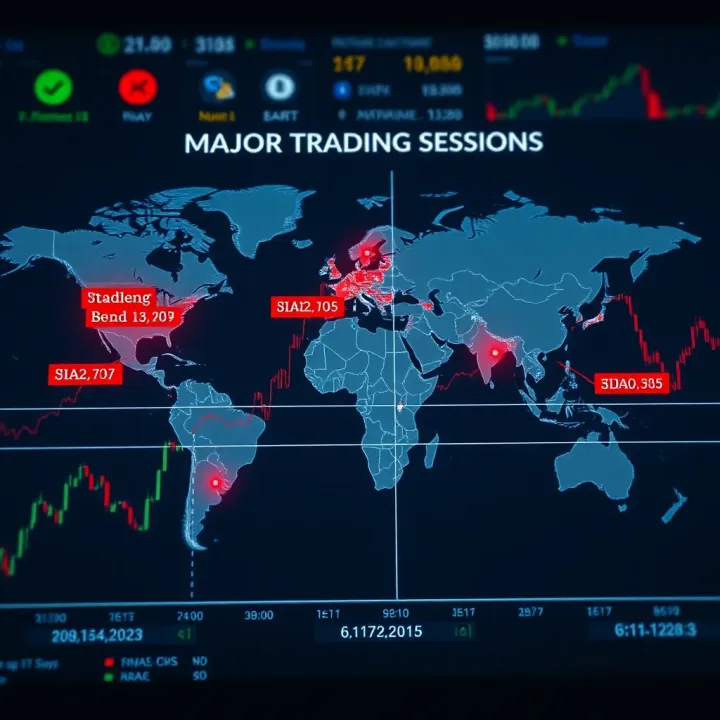
Knowing which sessions are active can help you time your trades better, avoid low-liquidity periods, and reduce the risk of erratic price jumps.
Here's a quick breakdown:
Sydney session: Opens at 10 pm SAST and closes at 7 am SAST. Trading volumes are usually lower, but this session sets the tone for the Asian market.
Tokyo session: Runs from 12 am to 9 am SAST, bringing increased activity, especially in Asian pairs like USD/JPY and SGD/ZAR.
London session: Opens at 9 am and closes at 6 pm SAST, often the busiest time, impacting pairs involving the Euro, Pound, and Rand.
New York session: Starts at 2 pm and closes at 11 pm SAST, when American traders engage heavily, influencing USD pairs.
South African traders should note the overlap timings to align strategies. For example, trading during the London-New York overlap (2 pm to 6 pm SAST) can offer high liquidity, tighter spreads, and better price movements for pairs like GBP/USD and USD/ZAR. Conversely, the Sydney-Tokyo overlap is quieter but can reveal early clues about Asian market sentiment.
Understanding these sessions isn't just about knowing the clock; it’s about spotting the patterns of market activity and adjusting your approach accordingly. Smarter timing means more control over risk and potential reward, especially in a fast-moving market like forex.
Understanding forex trading sessions is key for anyone serious about navigating the currency markets effectively. The forex market never rests; it operates around the clock thanks to different trading sessions aligned with major financial centres worldwide. Knowing when these sessions open and close can help you time your trades better and manage risk more effectively.
Forex operates 24 hours a day because it is a decentralised market spread across various time zones. Unlike the JSE or other stock exchanges that open and shut at fixed times, forex trading follows the sun as it moves from Asia to Europe to the Americas. For example, when traders in Johannesburg wind down their day, Tokyo’s markets are just getting started. This continuous cycle means there’s always some market activity somewhere in the world, offering traders ongoing opportunities.
This round-the-clock nature is especially useful if you can’t trade during traditional office hours. Suppose you prefer trading in the evening after work; the New York session overlaps with London to create high liquidity, so you still catch significant market moves. On the downside, the 24-hour clock can also bring challenges like sudden volatility spikes at session closures, meaning you need to stay alert or have tools in place to manage those risks.
Forex trading sessions correspond directly to the business hours of major financial hubs. These centres include Tokyo (Asia session), London (European session), New York (North American session), and Sydney (Pacific session). Each centre influences market behaviour, currencies traded, and volatility levels.
For instance, the London session is notorious for high liquidity, particularly with the rand (ZAR), euro (EUR), and British pound (GBP), since London acts as a global banking hub. When London’s session overlaps with New York’s, trading volumes spike and this can lead to increased price swings. Conversely, the Asian session tends to see less volatility in ZAR pairs but is active in yen (JPY) and Australian dollar (AUD) trades.
Getting a grip on how these sessions relate to each other and their respective centres helps in planning your trades realistically around expected market moves. For example, as a South African trader on SAST, you'll want to know that London opens around 9 am SAST, aligning well with local morning hours, while New York’s session starts late afternoon, which might affect your decision to trade in those timeframes.
Being aware of how global trading hours shift and overlap lets you anticipate liquidity and volatility changes, making your trading approach smarter and more responsive.
In short, recognising forex trading sessions allows traders to pick their battles wisely, understand when the market might be quiet or lively, and match their strategies according to real-world market rhythms.
Understanding the main forex sessions is essential because each reflects the trading hours of global financial centres that drive market activity. Recognising when these sessions start and finish helps traders predict periods of high volatility and liquidity, enabling smarter timing for trades. For instance, currencies linked to certain regions tend to be most active during their home sessions, which shapes price movements.
This session is the first to open among the major forex markets, running from around 2 am to 11 am South African Standard Time (SAST). Key currencies during this phase include the Japanese yen (JPY), Australian dollar (AUD), and New Zealand dollar (NZD). The volatility is generally low compared to later sessions, but the Asian session can still present useful moves—especially on news releases from Japan, China, or Australia.
The opening and closing times matter because South African traders have to decide if they are willing to trade in the early morning hours to catch breaks or trends in Asian markets. Understanding when the Tokyo market clocks in and out gives you a clearer picture of when liquidity may drop or increase, a factor crucial for risk management.

The London session dominates forex trading activity, as it often sets the tone for the rest of the day. Pound (GBP), euro (EUR), and Swiss franc (CHF) see a lot of action, with significant moves in currency pairs like EUR/USD, GBP/USD, and USD/CHF during this time. London is where roughly 30% of the daily forex volume happens.
For South African traders, the London session aligns well with normal working hours (starting at 9 am SAST), making it easier to participate actively. This overlap with South Africa’s business day is a practical advantage, letting you trade during the busiest market hours without disrupting your daily routine.
Starting at about 3 pm and running until midnight SAST, the New York session significantly influences market volatility. The US dollar (USD) drives the majority of volume here, affecting pairs like USD/CAD, USD/JPY, and EUR/USD. Economic reports from the US, such as job numbers, often trigger substantial moves.
Global liquidity peaks during New York hours, often overlapping with London’s close for a few hours. This overlap leads to the day’s highest trading volume, offering the best chance for tight spreads and fast execution. For South African traders, staying awake for these hours can pay off, especially for those who thrive on volatility.
While smaller than others, the Pacific session (around 10 pm to 7 am SAST) carries some unique characteristics. The Australian and New Zealand dollars see their main trading activity here, influenced heavily by economic news from Oceania. Volatility is subdued, but steady.
This session overlaps with the tail end of the Asian session, providing a smooth transition in liquidity. For swing traders or those avoiding the wild moves seen later in the day, this time offers an opportunity to monitor emerging trends quietly before the bigger sessions kick in.
Tip: Knowing the start and finish of these sessions allows you to map your trading schedule effectively, optimising your exposure to currencies during their most active periods.
Sessions: Define market activity by time zone
Active currencies: Shift with session focus
Volatility and liquidity: Vary through the day
South African timing: Make session times work for local schedules
Being aware of these sessions and their traits lets you approach forex with precision rather than randomness. It’s especially handy for South African traders juggling local work commitments, as you can plan to trade during peak market hours while balancing your day.
Forex trading periods don’t operate in isolation; the overlap between sessions creates some of the best chances for traders to act. These overlaps bring together liquidity and market activity from two major financial centres, leading to more pronounced price moves and better trading conditions. Recognising when these overlaps happen can give traders an edge, especially if they align their strategies to capitalise on heightened volatility or steadier flows.
The London-New York overlap is the busiest window on the forex clock, roughly between 3 pm and 7 pm South African Standard Time (SAST). During this time, both European and North American markets are open, combining the trading power of two financial giants. For instance, the US dollar and euro pairs like EUR/USD and GBP/USD see heavy volumes. This surge lifts market depth and brings sharper price swings, making it ideal for traders keen on intraday volatility.
Liquidity peaks in this overlap, which means tighter spreads and faster execution. This environment suits scalpers and day traders who depend on quick and predictable moves to bank profits. For example, traders often watch economic releases scheduled during New York hours because the market reacts dynamically with heightened volume. But be mindful—the spike in volatility also means price gaps and swift reversals can happen, so managing risk becomes just as important as reading the charts.
While this overlap doesn’t generate the same fireworks as London-New York, it’s a time of consistent trading activity. Occurring in the late evening SAST, it blends the quieter Sydney and busier Tokyo markets. Currency pairs like AUD/JPY and NZD/JPY tend to move steadily, thanks to Asia-Pacific economic news filtering through. This overlap is quite attractive to traders preferring less erratic price action and smoother trends.
Swing traders, who hold positions for several days, often view this period as a good window for entering or adjusting trades. Its steadier nature allows for clearer trend identification. For local traders with daytime commitments, these hours can fit comfortably into schedules, enabling them to monitor price action without the frantic pace typical of other overlaps. That said, patience is key here, as moves tend to be more gradual compared to the London-New York session.
Understanding these overlaps isn’t just about clock-watching but about recognising when market energy surges or settles, allowing you to choose the right time and pair to trade effectively.
Trading strategies that account for forex sessions can significantly boost the chances of success in the market. Different sessions offer varied market conditions: some are packed with rapid price moves while others trade more quietly. Aligning your approach with these rhythms helps you trade smarter, not harder.
Scalping during high-volatility periods is common among traders looking to make quick profits off small price movements. These bursts of activity mostly happen during overlapping sessions, such as the London-New York overlap in South African Standard Time (SAST), which runs roughly from 3 pm to 6 pm. During this time, liquidity peaks, and spreads tighten, giving scalpers more chances to enter and exit swiftly without excessive slippage. For example, a trader might scalp EUR/USD during this overlap when the pair's volatility spikes due to major economic news releases from either the US or Europe.
On the other hand, range trading during quiet sessions is favoured by those who prefer steadier, less risky environments. The Asian session, particularly the Tokyo market hours, tends to be less volatile. Here, prices often move within well-defined ranges. Traders can identify support and resistance levels and place buy-and-sell orders at these zones, aiming to profit from predictable oscillations. A South African trader might focus on JPY pairs overnight, capitalising on the steadier trends typical of this session.
Being aware of session closures is crucial to managing risk effectively. The forex market doesn’t shut down completely but liquidity drops sharply as one session ends and another starts. Price gaps or sudden moves often occur around these times. For instance, as the New York session winds down late at night SAST, trading tends to slow dramatically, increasing the risk of slippage or unexpected price jumps overnight. Traders should either close positions or adjust stop losses ahead of these periods to avoid nasty surprises.
Handling unexpected volatility is another key risk management skill. Sudden news releases, often scheduled for the start of sessions or overlaps, can catch traders off guard. For example, a surprise interest rate decision during the London session can rip through the markets in minutes. To cope, traders should monitor economic calendars closely and might consider reducing position sizes or using wider stops around these events. Having a plan to pause trading or hedge exposure during news spikes helps safeguard capital.
Trading aligned with sessions isn’t just about timing; it’s about matching your style to market conditions and protecting your capital when the market throws a curveball.
In short, knowing when to scalp during busy times and when to range trade in calmer periods, combined with mindful management of session risks, helps build a more resilient approach tailored to the ebb and flow of the forex market. This mindset is especially valuable for South African traders fitting forex activity into their daily schedules.
For South African traders, understanding global forex sessions means more than knowing when markets open and close—it’s about syncing these hours with everyday life and local realities. The South African Standard Time (SAST) places traders in a unique spot where they can interact with key global markets during workable hours without having to burn the midnight oil. However, smart trading here also involves handling time differences and balancing trading with other commitments.
South Africa is two hours ahead of UK time during its winter (SAST), and just one hour ahead when the UK moves to British Summer Time. This timing allows South African traders to catch the bulk of the London session during working hours, which is often when liquidity peaks. For example, the London session opens at 9 am GMT, translating to 11 am SAST—well within the typical office day, making it easier to monitor trades live without disrupting daily routines. Conversely, the New York session overlaps with London’s but opens later in our afternoon, which might stretch beyond regular work hours.
Trading during peak volatility generally means focusing on the late morning to afternoon. Many traders find that tuning in from around 9 am to 5 pm SAST hits key overlaps—between London and New York for active currency pairs like EUR/USD and GBP/USD. The Asian session (Tokyo) runs overnight SAST, which can be less ideal for those who prefer to avoid night trading or want to preserve a work-life rhythm. That said, swing traders or those using automated strategies can take advantage of this quieter period as well.
Successfully matching trading hours with work-life balance enhances decision-making and reduces burnout, especially when electricity and internet interruptions are everyday challenges.
South African traders have access to a range of global and local brokers, including IG, Plus500, and local favourites like EasyEquities and RMB Private Bank’s trading platform. MetaTrader 4 and 5 platforms remain popular due to their user-friendly interfaces and extensive charting tools. Meanwhile, some brokers offer tailored solutions with South African rand (ZAR) accounts, easing deposit and withdrawal processes without hefty currency conversion fees. Reliable market data feeds are typically integrated into these platforms, ensuring clients stay on top of volatile market moves.
One local challenge is the cost and reliability of internet data, especially outside major cities. Forex trading demands stable connectivity to avoid slippage or missed trades. Data packages from Vodacom or MTN can be pricey, so many traders optimise by choosing fibre broadband at home or cheaper uncapped plans when stationary. Mobile trading apps help when on the move but are less ideal during heavy market swings requiring precise input. Planning for load-shedding is another factor; having a UPS or backup power source is advisable to maintain trading access during power interruptions.
South African traders who combine smart scheduling with robust platforms and sound internet plans can engage global forex markets effectively, despite the local challenges. The key is tailoring trading approaches to fit both international market rhythms and local conditions well.
📈 Get to grips with indices in forex trading: how they affect currency pairs and strategies tailored for South African traders in shifting global markets.
🤖 Understand how forex trading bots operate, their pros and cons, plus tips for picking the right one while staying compliant with South African trading rules.
🔍 Understand free margin in forex trading: learn how it affects your trades, risk, and equity to manage your Forex account confidently in South Africa’s market.

💻 Find the perfect laptop for forex trading in South Africa. Compare specs, software, connectivity & budget tips for smooth trading without overspending. 📈
Based on 7 reviews