

Understanding Derivative Products in South Africa
📊 Understand derivatives: types, market roles, risk management & investment tactics. Key insights for navigating South Africa's financial landscape with confidence.
Edited By
Liam Foster
High-frequency trading (HFT) has become a notable presence in South Africa’s financial markets. This type of trading uses powerful computers and complex algorithms to execute large volumes of trades in fractions of a second. Unlike traditional investing, where decisions may take minutes or hours, HFT operates on milliseconds or microseconds — making it a strikingly fast and data-driven approach.
In the South African context, HFT mainly takes place on the Johannesburg Stock Exchange (JSE), where some of the world’s largest local and international financial firms partake. These players seek to profit from tiny price movements by rapidly buying and selling stocks, derivatives, or forex. For example, a firm might exploit small discrepancies in share prices between different JSE-listed companies or even between other global exchanges during overlapping trading hours.

HFT contributes significantly to market liquidity, enabling easier buying and selling, but it also introduces complexities like increased volatility during stress periods.
The benefits of HFT in South Africa include tighter bid-ask spreads, which reduce transaction costs for everyday investors. Additionally, HFT can help in price discovery by reflecting new information quickly in asset prices. However, the fast pace and automated nature raise concerns, such as potential market manipulation and systemic risk.
Local regulators like the Financial Sector Conduct Authority (FSCA) and JSE maintain oversight to ensure that HFT practices comply with market fairness rules. They focus on preventing unfair advantages, such as spoofing or layering, where orders are placed and quickly cancelled to mislead other traders. South Africa’s evolving regulatory framework tries to balance innovation with investor protection.
Understanding how HFT fits in South Africa involves recognising its role amid unique market characteristics — including relatively lower liquidity compared to major global markets and the influence of Eskom’s loadshedding on trading operations. For traders and investors, knowing the mechanics, risks, and regulatory boundaries of HFT provides a clearer lens through which to view market movements and trading opportunities.
In the following sections, we will break down how HFT operates, its key players in Mzansi, the rules shaping it, and what it means for the broader financial landscape here.
High-frequency trading (HFT) has become an influential part of the South African financial markets, especially on the Johannesburg Stock Exchange (JSE). Understanding its role helps traders, investors, and analysts grasp how trades are executed at lightning speed and how liquidity and pricing are affected in this modern era. HFT isn’t just a foreign concept; it is firmly embedded in local market practices, shaping how market makers and proprietary traders operate.
High-frequency trading involves using sophisticated algorithms and powerful computers to execute large numbers of trades within fractions of a second. These trades seek to capture very small price movements repeatedly, turning millisecond advantages into meaningful profits. In practice, HFT can drastically increase market liquidity and help narrow bid-ask spreads, making it easier and cheaper for regular investors to buy or sell shares.
Market makers play a crucial role by continuously offering to buy and sell securities, ensuring there’s always a counterparty for traders. In South Africa, market makers often employ HFT techniques to balance their books rapidly during volatile sessions, maintaining the smooth flow of trade on the JSE. By providing this constant market presence, they reduce price gaps and support stable trading conditions, particularly in less liquid shares where demand can be patchy.
Locally, common HFT strategies include market-making, statistical arbitrage, and latency arbitrage. Market-making algorithms post bid and ask prices, profiting from spread capture. Statistical arbitrage spots temporary price inefficiencies between related securities and bets on their correction. Latency arbitrage exploits tiny speed differences in receiving market data, a tactic South African firms monitor closely as co-location facilities grow more popular.
The JSE gradually shifted from floor trading to electronic platforms in the late 1990s and early 2000s, opening the door for algorithm-driven methods. The introduction of the Automated Trading System (ATS) improved order matching speeds drastically. This digital shift laid the groundwork for HFT by making instant electronic order placement and cancellation possible, a vital ingredient for high-speed strategies.
Since the early 2000s, algorithmic trading has grown steadily as more South African firms adopted automated order execution and complex quantitative models. International HFT firms also began participating on the JSE, attracted by the market’s liquidity and opportunities. The development of local IT infrastructure and co-location services further supported the rise of algorithmic and high-frequency trading.
Today, HFT constitutes a significant share of daily turnover on the JSE, with both local and international participants actively engaged. Regulatory bodies keep a close watch on these activities, balancing the benefits of increased liquidity with the risks of market manipulation. That said, challenges like Eskom loadshedding still pose occasional threats to trading continuity, prompting some firms to invest in backup power and alternative data feeds.
In essence, understanding the origins and mechanics of HFT in South Africa equips market players with the knowledge needed to navigate the evolving trading landscape confidently and effectively.
Regulation and compliance form the backbone of trustworthy and stable high-frequency trading (HFT) operations in South Africa. With the rapid pace of trades and potential complexity of algorithms used, strong oversight ensures fair market conduct and protects all participants from systemic risks and abuse. This section unpacks the key regulatory bodies, frameworks, licensing, reporting, and risk management requirements that HFT firms must adhere to locally.
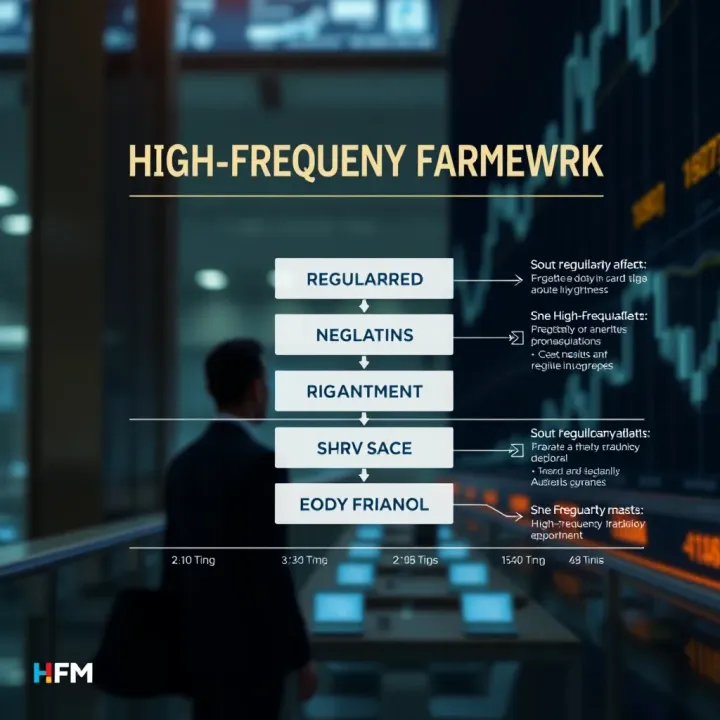
The FSCA regulates South Africa’s financial markets with an eye on maintaining integrity and protecting investors. For HFT firms, the FSCA focuses on enforcing standards around transparency, market abuse prevention, and operational soundness. This includes monitoring algorithmic trading for potential manipulation or disorderly market conduct, a crucial role given the speed and volume involved in HFT activities. The FSCA also requires firms to demonstrate adequate systems and controls before authorisation.
As South Africa’s primary securities exchange, the Johannesburg Stock Exchange (JSE) has its own set of rules governing electronic and algorithmic trading. These rules demand that HFT firms register their algorithms and maintain controls to prevent disruptive trading patterns. For instance, firms must have kill switches in place to immediately halt trading if anomalies or errors arise. The JSE also mandates transaction-level transparency, supporting efficient price discovery and protecting smaller market players from unfair practices.
HFT firms must comply with FICA to fight money laundering and financial crimes. This involves rigorous client identification and verification processes, as well as ongoing monitoring of suspicious transactions. Additionally, the Protection of Personal Information Act (POPIA) requires firms to safeguard clients’ personal data acquired during trading activities. These compliance layers ensure that HFT entities contribute to a safer, more responsible trading environment.
Before operating, HFT firms must register with the FSCA and the JSE, providing detailed information on ownership, governance, and trading strategies. Registration helps the authorities assess the firm’s readiness to manage the complexities of algorithmic trading and track accountability. For example, local prop trading firms focusing on equities must disclose their systems and risk procedures upfront to prevent unregulated or exploitative activity.
South African regulations require detailed reporting of trades executed by HFT firms. This includes time-stamped records and trade details submitted to regulators for monitoring market behaviour. Such reporting enables the detection of unusual patterns indicative of manipulation or system faults. Firms often use automated tools to capture and report trades in real time, ensuring compliance and supporting market integrity.
HFT firms must implement robust risk management frameworks, including pre-trade risk checks and post-trade audits. Controls like automated shut-off mechanisms help prevent cascading errors or runaway trades that could destabilise the market. Regulatory audits, usually conducted by the FSCA and JSE, verify adherence to these controls and review system resilience. This ongoing scrutiny encourages firms to maintain strong operational discipline.
Proper regulation and compliance don't just tick boxes; they build confidence across the entire financial market, benefiting traders, investors, and the broader economy alike.
In summary, the regulatory environment for HFT in South Africa is designed to foster innovation while keeping an eye on potential risks. Firms compliant with FSCA, JSE regulations, FICA, and POPIA contribute to a safer and more transparent market, supporting steady growth and investor protection in this fast-moving sector.
High-frequency trading (HFT) plays a significant part in shaping South Africa’s financial markets. Its presence affects everything from liquidity to price discovery, with economic knock-on effects for investors and market stability. Understanding these impacts helps traders, analysts, and consultants grasp not only how markets function but also where potential risks and opportunities lie.
Improved liquidity and tighter spreads
One of the key benefits of HFT is enhanced liquidity in the market. By executing thousands of trades within seconds, HFT firms facilitate a continuous flow of buy and sell orders. This keeps the order book thick, meaning buyers and sellers can trade large volumes without greatly affecting prices. Practically speaking, this results in narrower bid-ask spreads—the difference between the highest price buyers are willing to pay and the lowest price sellers accept. Tighter spreads reduce transaction costs, which is a welcome boost for market participants, especially retail investors who often face higher relative costs.
Increased market efficiency
HFT contributes to quicker price adjustments by arbitraging small price discrepancies across different assets and exchanges. This constant recalibration means prices reflect available information more accurately and faster. In South Africa, this is crucial given the JSE's integration with global markets and the need to stay competitive. Greater efficiency benefits the overall economy by ensuring that capital allocates to companies based on timely and fair valuations, facilitating investment and growth.
Potential benefits to retail and institutional investors
Retail traders gain from HFT through improved access to fair prices and the ability to transact quickly during volatile periods. Institutional investors benefit as well since enhanced liquidity reduces market impact costs when moving large positions. For instance, pension funds or asset managers can execute complex trades across various sectors (like banking or mining) without unsettling the market too much. While some argue HFT primarily aids sophisticated operators, evidence from the South African context shows a broader market uplift due to tighter spreads and smoother price discovery.
Market manipulation concerns
Despite its advantages, HFT raises questions around manipulative practices such as spoofing—placing orders without intention to execute to mislead others—or layering to distort price signals. While the JSE and FSCA keep surveillance, detecting and proving such tactics remains complex. In South Africa’s relatively smaller market size, these manipulations can have outsized impacts, shaking investor confidence if left unchecked.
Technology infrastructure and stability issues
HFT relies heavily on cutting-edge tech and lightning-fast connections. However, South Africa’s infrastructure can be less predictable; internet outages, data feed delays, or hardware failures risk interrupting algorithmic strategies. Any downtime or faulty execution in HFT can lead to significant losses or unintended market disruptions, emphasising the need for robust back-up systems and contingency planning.
Impact of loadshedding on trading continuity
Loadshedding, South Africa’s rolling power cuts, poses unique challenges for HFT operations. Power outages can abruptly halt servers or networking equipment essential for continuous trading activity. Firms often invest in backup power solutions like generators or UPS systems, but these add to operational costs. Even short disruptions may result in missed opportunities or execution errors, affecting both individual traders and overall market functioning.
While high-frequency trading brings greater speed and efficiency, the South African market’s specific conditions require vigilant management of technological and ethical risks to maintain a level playing field for all.
Overall, understanding these economic and market impacts is key for anyone active in South Africa’s trading environment. It informs better decision-making and highlights the delicate balance between innovation and market stability needed for sustained growth.
Understanding the players and technology behind high-frequency trading (HFT) in South Africa is key to grasping how this fast-paced market operates. They shape liquidity, price discovery, and the overall market environment on the Johannesburg Stock Exchange (JSE). Their influence extends beyond mere speed — it’s about the systems, strategies, and connections that keep HFT competitive and reliable.
Local proprietary trading firms typically run their own capital to exploit speed advantages and market opportunities. These SA-based outfits often develop proprietary algorithms tailored to JSE’s unique market conditions and regulatory landscape. Firms like Renaissance Capital and others have been known to engage in electronic trading with sophisticated strategies such as statistical arbitrage and market-making, helping tighten spreads and boost liquidity.
On the flip side, international HFT firms active on the JSE bring global expertise and technology to the local stage. Big names from the US and Europe, with deep pockets and cutting-edge infrastructure, operate through JSE licences or partnerships. They often introduce advanced market models that raise competitiveness but also challenge local firms to keep pace. These international players can adapt their strategies quickly across markets but must navigate South African-specific issues like currency volatility and loadshedding interruptions.
While these firms conduct trades, the brokers and intermediaries play a critical support role. Acting as gatekeepers, brokers provide necessary market access and ensure trades comply with JSE rules. They also offer execution services to smaller clients who can’t directly interface with high-speed platforms. Some brokers have developed in-house tech to offer faster-api access or aggregated liquidity pools, making them crucial middlemen in South Africa’s HFT space.
Co-location services and low-latency connections are vital for firms racing to execute trades faster than their rivals. At the JSE data centre, many HFT firms rent server space close to the exchange's matching engines to minimise transmission delays. Even a millisecond can mean the difference between a winning or losing trade. These connections form the backbone of South African HFT, enhancing speed without which certain strategies wouldn’t work.
Then there are trading algorithms and software platforms — the brains behind HFT operations. Sophisticated algorithms crunch market data, detect patterns, and execute orders automatically at lightning speed. Local and international firms employ platforms customised for the JSE environment, integrating factors like local market volatility and currency swings. Open-source frameworks and proprietary solutions co-exist, with firms continuously improving models for accuracy and speed.
Finally, data feeds and market access represent ongoing challenges. Reliable, real-time market data is essential for informed decision-making. However, bandwidth constraints or technical glitches can impair feed quality, leading to costly mistakes. Additionally, smaller players sometimes struggle to acquire direct market access due to fees or regulatory hurdles, leaving them dependent on intermediaries. This can create friction in maintaining a level playing field within South African HFT.
In South African HFT, technology is not just about speed but about resilience and access. The capacity to maintain smooth operations amid infrastructure challenges is just as important as milliseconds gained.
Together, the players and their technology define the character and capabilities of South Africa’s high-frequency trading landscape, shaping everything from market liquidity to stability.
Anticipating how high-frequency trading (HFT) will evolve in South Africa sheds light on the changing dynamics of local markets. This section looks ahead, considering shifts in regulation, new tech adoption, and international influences shaping HFT practices. Understanding these elements helps traders and investors prepare smarter strategies and navigate potential risks effectively.
South Africa's regulatory landscape around HFT is expected to tighten, with amendments focused on improving transparency and market fairness. The Financial Sector Conduct Authority (FSCA) aims to introduce clearer rules on algorithmic trading disclosures and real-time monitoring to curb manipulative activities seen in other markets. These amendments will be practical for market participants by setting standardised compliance requirements, making the market more predictable and secure.
Alongside regulation, tech advances like co-location services have grown on the JSE, prompting regulators to reassess how access is granted to prevent unfair speed advantages. New rules might compel HFT firms to justify why their algorithms don’t jeopardise market stability, helping to level the playing field for smaller players.
Emerging technologies such as artificial intelligence (AI) and machine learning hold promise for HFT firms in South Africa. These tools can improve how algorithms adapt to market conditions, spotting patterns invisible to traditional models. For instance, local firms are starting to deploy machine learning to better predict fluctuations caused by factors like Eskom loadshedding or political announcements.
The practical benefit is that AI-powered algorithms can reduce trading errors and seize opportunities faster, potentially increasing profits while managing risks better. However, this also raises challenges around explainability and regulatory oversight, since AI decisions often happen as a "black box", prompting debates on ensuring responsible adoption.
Global trends increasingly influence South Africa’s HFT market. International regulators, particularly in Europe and the US, are pushing for stricter controls on market manipulation and algorithmic accountability. This pressure filters through due to the JSE’s integration with global financial networks and participation by multinational trading firms.
Additionally, the rise of sustainability-focused investing worldwide is prompting questions on how HFT strategies align with Environmental, Social, and Governance (ESG) principles. South African market participants must hence adapt or risk lagging behind global best practices, especially as institutional investors ramp up ESG requirements.
One pressing concern in South African HFT is ensuring fair access for all traders. Fast systems and co-location spots can create advantages for big players, squeezing out smaller firms or retail investors. Regulators are exploring ways to widen access without compromising speed, such as introducing tiered market data fees or more transparent order execution methods.
This balance is vital so that innovation doesn’t result in a rigged system. Market integrity depends on confidence that prices reflect real supply and demand rather than algorithm-driven distortions.
Ethical conduct and transparency are closely connected to this issue. South Africa faces scrutiny around practices like quote stuffing and spoofing, which some HFT algorithms might trigger unintentionally. Enforcing strict disclosure requirements and conducting regular audits help address these concerns, ensuring participants adhere to fair play.
Besides ethical worries, maintaining transparency allows investors to understand how markets operate and reduces the chance of harmful market events.
Mitigating systemic risks due to market volatility remains a challenge, especially given South Africa’s susceptibility to shocks from loadshedding, political unrest, or currency swings. HFT firms must design safeguards to pause or throttle activity when unusual volatility strikes, preventing cascades of rapid-fire trades that exacerbate instability.
Coordination between regulators and trading firms is crucial here. For example, circuit breakers and volatility pauses used globally during sudden crashes could be fine-tuned to local conditions, helping to protect market health without stifling trade.
Safeguarding market fairness while embracing technological progress is the tightrope South Africa’s HFT ecosystem is working hard to navigate.
In summary, the future of HFT in South Africa hinges on careful regulation updates, thoughtful adoption of AI, and measures that maintain trust and stability. Investors and traders who stay informed on these developments will be better placed to capitalise on opportunities and manage associated risks.
📊 Understand derivatives: types, market roles, risk management & investment tactics. Key insights for navigating South Africa's financial landscape with confidence.

📱 Looking for the best trading app in South Africa? Discover key features, security tips, cost breakdowns, and usability insights to trade smarter with confidence.

💻 Find the perfect laptop for forex trading in South Africa. Compare specs, software, connectivity & budget tips for smooth trading without overspending. 📈

📄 Discover how to register for DERIV in South Africa, covering key steps, required documents, common hurdles, and expert tips for both individuals and businesses.
Based on 8 reviews